

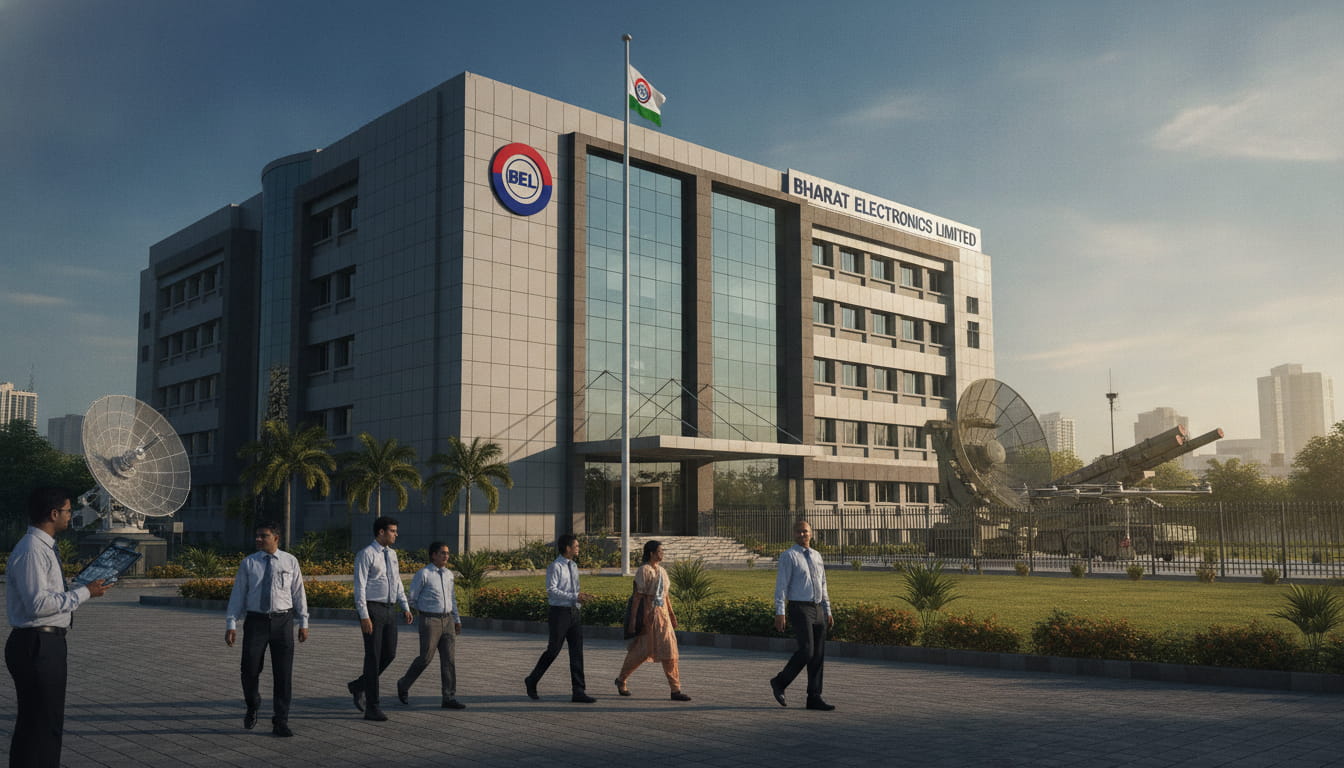

Bharat Electronics Limited (BEL) is anticipating possible production orders exceeding ₹40,000 crore for Project Kusha, the long-range air-defence programme developed in India. The firm is now collaborating with the Defence Research and Development Organisation (DRDO) on critical subsystems, with the orders expected to come through by around financial year 2029, although this also depends on the government’s decision on system integration and the successful conclusion of development and trials.
What Is Project Kusha?
Project Kusha — an Extended Range Air Defence System, Indian multi-layered air-defence network. This is meant as an in-house substitute for long-range imported systems, like the Russian S-400, for the Indian Air Force.
It is likely to integrate long-range surveillance radars, command-and-control centres and interceptor missiles and be intended against counter-air threats such as aircraft, cruise missiles, drones believed to on the order of 210 with a range of up to463 kilometers. Its architecture can identify targets and track them before designating a best-fit interceptor against it.
Project Kusha was granted government approval to develop in 2022 and subsequently got an Acceptance of Necessity for procuring five squadrons at a cost of around ₹21,700 crore.
BEL’s Role
BEL is currently partnered with DRDO as a development partner for Project Kusha. The involvement of important subsystems, especially advanced radars and command-and-control technologies are further achieved by the company in development.
These are all key areas in which an integrated air-defence system must perform. The radars provide a picture of targets, but the command systems are responsible for decision-making (using combat management systems that combine information from various sensors) and coordination of responses to incoming threats.
BEL’s expected responsibilities could include:
- Air-surveillance and tracking radars.
- Battle-management and command systems.
- Communication and data links.
- System integration.
- Electronic and power-management subsystems.
- Maintenance and lifecycle support.
- Future upgrades and indigenous technology insertion.
The company’s final order value will depend on whether it is selected as the sole system integrator or as one of two integration partners. BEL has indicated that a system-integrator decision is still pending.
Why ₹40,000 Crore Matters
A ₹40,000 crore order will significantly increase BEL defence order book and provide a long-term revenue opportunity. The figure represents a production opportunity, not an already-awarded contract.
The amount comprises of system integration, radars, command networks, support equipment, spares maintenance and phased deliveries for various squadrons. It is probably when the system completes development, is evaluated by users and eventually cleared for production orders.
If selected as the system integrator, BE L’s government could hand over orders worth ₹40,000 crore to the company.
Indigenous Alternative to S-400
Often referred to as India’s own version of the S-400, Project Kusha might not be an identical system in terms of design, deployment model or missile technology.
The main aim is to develop an Indian air-defence architecture tailored for national needs and can be upgraded without complete dependency on a foreign source. The home-grown control over the system might also allow for easier integration with Indian radars, communication networks and fighter aircraft among various air-defence assets.
It also supports the overall aim of Aatmanirbhar Bharat by facilitating domestic production of advanced sensors, missiles, software and command systems.
Multi-Layered Defence
A modern air-defence network does not depend on one missile or radar. It uses multiple layers so that a target can be engaged at different ranges and altitudes.
Project Kusha is expected to work alongside systems such as:
| Defence layer | Main purpose |
| Long-range interceptors | Engagement of aircraft and missiles at extended distances |
| Medium-range systems | Protection of military formations and strategic sites |
| Short-range systems | Defence against low-flying aircraft, drones and cruise missiles |
| Very short-range systems | Point defence against close-in aerial threats |
| Electronic warfare | Jamming, deception and disruption of hostile drones and sensors |
This layered approach helps reduce the risk of a single weapon or sensor failure creating a gap in the defence network.
Threats the System Could Address
The changing nature of warfare has increased the need for flexible air-defence systems. Modern militaries use a combination of aircraft, cruise missiles, ballistic missiles, drones and loitering munitions to attack military positions and critical infrastructure.
Project Kusha could improve India’s ability to respond to:
- Fighter aircraft.
- Cruise missiles.
- Unmanned aerial vehicles.
- Loitering munitions.
- Precision-guided weapons.
- Selected ballistic-missile threats.
- High-value aerial targets operating at different altitudes.
The system’s actual interception envelope will depend on the final missile family, radar performance, command architecture and operational configuration.
Procurement Timeline
The potential ₹40,000-crore opportunity will not become an immediate order. Several steps remain before production contracts can be signed:
- Completion of system development by DRDO and industry.
- Ground and flight testing of radars and interceptor missiles.
- User evaluation by the Indian Air Force.
- Finalisation of the system architecture.
- Appointment of the system integrator.
- Government approval for procurement.
- Contract negotiations and phased production.
- Delivery, deployment and acceptance testing.
BEL’s current expectation is that production orders could be received by FY2029, but this timeline depends on technical progress and government approvals.
Impact on BEL
Project Kusha could become one of BEL’s largest future defence programmes. The company already supplies radars, communication systems, electronic-warfare equipment and other defence electronics to the Indian armed forces.
A major Kusha order would provide BEL with:
- Higher long-term revenue visibility.
- A larger domestic air-defence portfolio.
- Greater involvement in system-level integration.
- Opportunities for upgrades and maintenance.
- Additional work for Indian component suppliers.
- Potential export possibilities in the future.
However, investors should distinguish between a projected opportunity and a confirmed order. The final value will depend on the selected procurement model, the number of squadrons, BEL’s role and the division of work among participating companies.
Broader Defence-Industry Significance
It shows the effort of India to evolve from being a nation that merely assembles imported components to one that designs full integrated strategic systems locally. They need radar engineering, missile guidance and command software; secure communications; propulsion; electronic warfare (EW); systems integration.
It is able to generate a range of benefits through the programme across a large network of new public-sector units, private manufacturers, research laboratories and specialist technology companies. This could also spur Indian replacements for imported sensors and battlefield-management systems.
Conclusion
This shows the commercial and strategic value of India’s home-grown long-range air-defence programme, Project Kusha for which BEL expects orders worth more than ₹40,000 crore. The company is already involved with DRDO’s radar and command system development efforts, which can easily be continued if the F-INSAS were to become an outright winner or joint lead system integrator.
This opportunity still depends upon government decisions, plus tests and subsequent formal contract awards. Project Kusha could enhance India’s air-array network position, while also becoming one of BEL’s largest defence-electronics business drivers as the programme evolves in accordance with initial timing.