
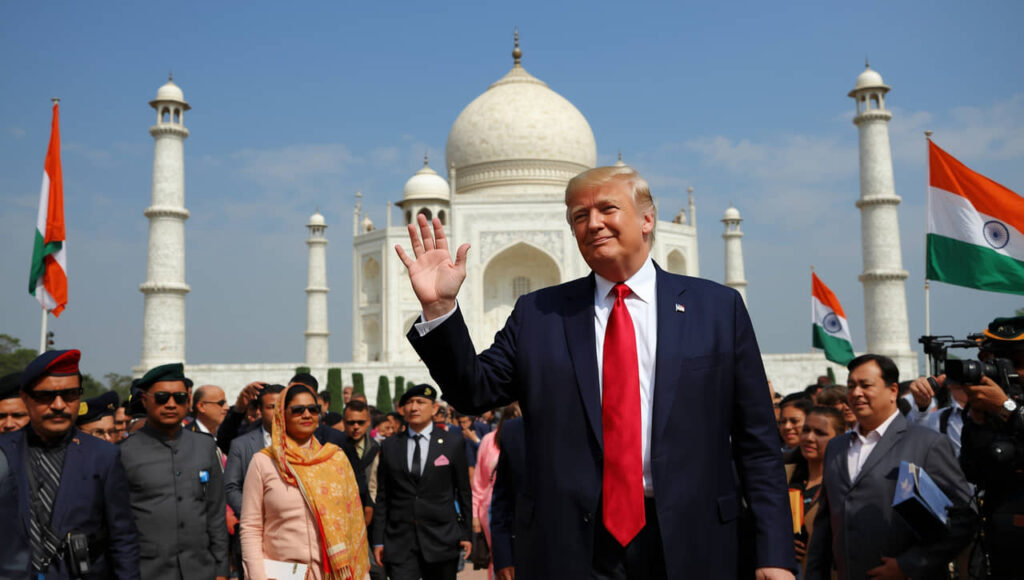

Trade discussions with India are going on in “full speed” and US President Donald Trump will do a deal with Prime Minister Narendra Modi if he wants one, the White House has said. In brief remarks to reporters at the White House, Trump had words of praise for Indian Prime Minister Narendra Modi, whom he termed “a great man” and a “friend of mine,” and confirmed that Modi has invited him to visit India. Asked directly if he would travel to India next year, Trump said: “It could be, yes”.
US and India’s trade talks are centred around a Bilateral Trade Agreement (BTA) that will enable trade to grow from the current USD 191 billion to over $500 billion by 2030. The meetings have drawn global attention, at a time when the US has slapped 50% tariffs on Indian goods including a base duty of 25% and an additional 25%, primarily due to India’s purchases of Russian crude oil. Trump credited Modi for ending the purchases of Russian oil almost entirely, saying this was a good move.
India’s commerce minister Piyush Goyal has also said that there have been advancements in the talks but crucial and critical issues are still yet to be resolved. Five rounds of negotiations have been held since March 2025 as online consultations continue to support the negotiation. The commerce deal is seen as a crucial first step to enhancing economic relations, with both sides working toward a win-win result.
In the bigger picture, Washington uses tariffs as a strategic tool, while India tries to protect its trade interests and energy security at the same time. The US Supreme Court is also looking at whether some of Trump’s tariff actions are legal. This could change the way trade works around the world.
In brief, Trump’s positive comments about the trade talks and willingness to visit India next year show that the two countries are becoming more involved in each other’s economies and politics, even though there are still some difficult issues to work out in the negotiations.