


Spain’s workers launched a general strike on Wednesday, Nov. 11, that hit workplaces, public transportation, and a current election campaign, bringing Spain’s housing crisis into everyday life. According to the Associated Press, this is the first time Spain has had a national general strike since 1995. This strike occurred just three weeks prior to Spain’s general election, so the strike has a dual social and political aspect.
The walkout caused disruptions to transportation systems and factories, as well as to schools and universities which were reported closed or operating with limited resources. Public transport systems in Barcelona were stopped or delayed as people commuted to work in the morning. Buses were one of the services that suffered most from the disruption in Madrid, and heavy rainfall increased the problems. There were protests and gatherings scheduled throughout Spain, including in Madrid, Barcelona and other cities, for later in the day. The Associated Press’s article about the general strike covered these impacts, along with the conflicting political views surrounding the event.
Housing costs became the common cause
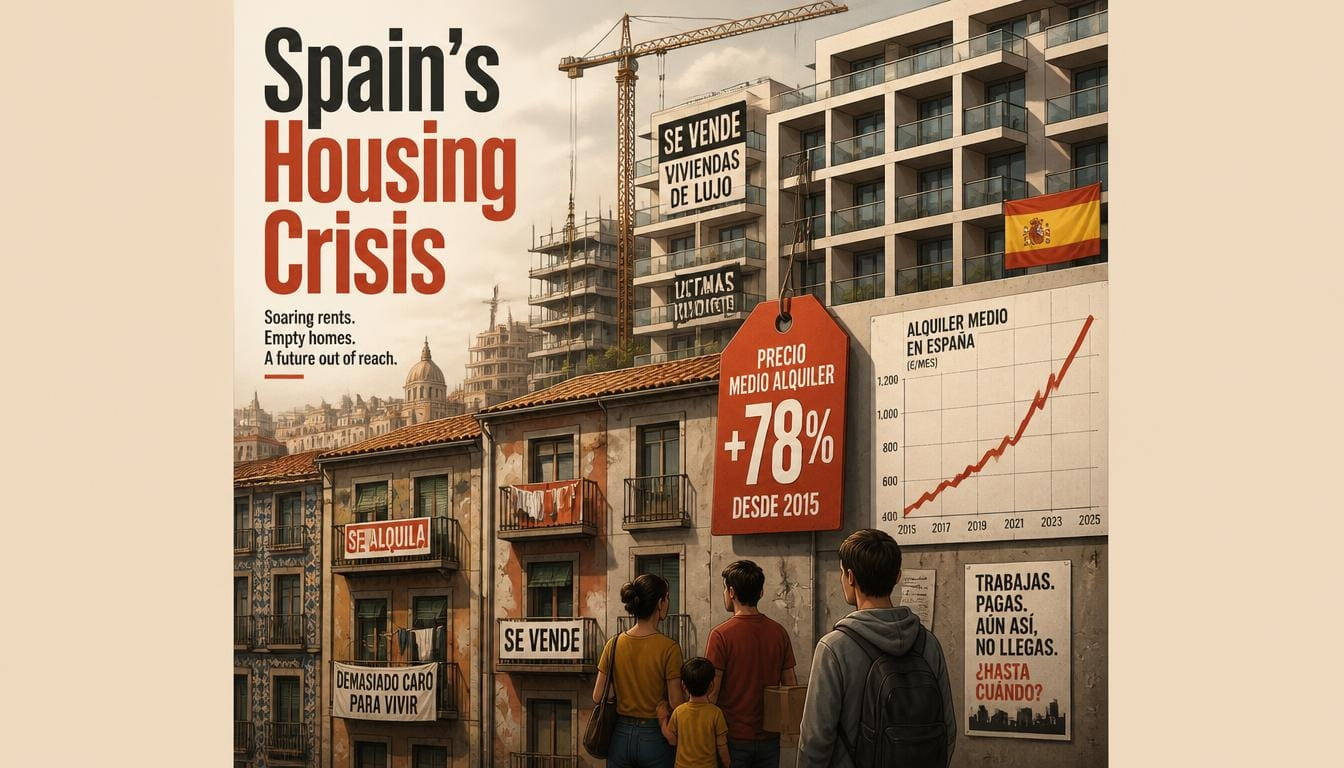
In the last ten years, the cost of renting an apartment in Spain has almost doubled according to AP, which is making it difficult for people to pay for their housing costs, and creating a political issue out of the housing problem. Activists who fight for affordable housing and unions are making connections between what people spend on their rents/mortgages, how much they earn, whether or not they feel safe in their homes, and whether or not young adults will be able to afford their own place to live.
Labor unions, UGT and CCOO, joined forces with housing advocacy groups to demand that the government step up its involvement in the housing sector and that it work with employers to negotiate a new minimum wage agreement. In addition to these demands, according to AP, housing groups were also calling for several other actions to be taken, such as limiting the number of tourist apartments, taking action against speculative practices in real estate and providing tenants with greater protection.
These recommendations cover several areas of the issue. Short-term rental restrictions will allow more housing units to remain available for long-term residents. Regulations concerning speculation will restrict the types of investments made in real estate by individuals who some believe contribute to rising costs. Rental lease protections can provide greater stability to tenants, and wage agreements can determine how much a household can pay in rent. The probable outcomes of each of these recommendations will depend upon the way they are implemented, enforced, and if additional housing is constructed in high-demand areas.
Unions reported broad participation
UGT and CCOO claimed that there was a broad participation in the strike, with 90 percent of the automotive and port sectors being shut down, 85 percent of the meat processing industry being shut down, 82 percent of the waste management industry being shut down, and 75 percent of the energy industry being shut down. It is important to note that these statistics are based on the unions’ estimates of the level of participation in the strike, and therefore they can only claim to represent the estimated level of participation in those specific industries, not an independent assessment of the total number of people who participated in the strike across Spain.
While no official turnout numbers have yet been released, the visible impacts on major urban services demonstrate the scope of the strike. In addition to being successful in disrupting service, there have been some minor disturbances such as the use of roadblocks in Barcelona and physical altercations between picketers and law enforcement personnel at a wholesale market located just outside of Madrid, according to reports from AP. Although these events were relatively minor during the initial periods reported, they have contributed to the larger discussion surrounding how to assess the outcome of the day.
The election raises the stakes
The strike took place during a politically sensitive time. Prime Minister Pedro Sánchez announced the early election on October 5 in order to attempt to extend the life of his left-wing coalition. In recent weeks, the housing problem has received increased media coverage due to the televising of the eviction of an 87-year-old woman in Madrid (known as Maricarmen), who died shortly after being evicted, which increased public outrage regarding rent prices and job insecurity, according to AP.
The government of Pedro Sánchez had proposed emergency housing legislation; however, both of these proposals were defeated by conservative groups within the parliament. It was believed that the government would seek parliamentary support for the same legislation once the general strike ended. Pedro Sánchez has stated that previous social initiatives such as the 40-hour work week and the National Health System were accomplishments related to workers’ movements. Critics such as the conservative Popular Party and far-right Vox believe unions are participating in the strike to support the current governing coalition and prevent the government from taking larger-scale action against the housing crisis.
Analyst Oriol Bartomeus from the Autonomous University of Barcelona stated to AP that this action may assist the Left in directing the focus of the campaign back to housing issues; however, he added that any possible violent actions would draw attention away from the housing issue and towards maintaining law and order. This statement was a reflection of political strategy and was not intended to predict the outcome of the election. Ultimately, the effectiveness of the strike will be determined in part by how much it influences the overall debate surrounding housing issues, as well as whether or not political parties offer solutions to these problems that are viewed as credible by voters.
What happens after the picket lines?
A strike is a way to show dissatisfaction and will result in short-term cost, however, a strike is not a solution to housing supply, rental rates or wages. The first step toward change is whether the government and/or political parties use the demands made during the strike as the basis for developing specific policy proposals and if those proposals are passed by parliament. Additionally, even after a policy has been passed into law, it can take some time before it begins to impact a family’s budget.
Spain’s housing debates reflect a wider European tension of large amounts of people wanting to live in the biggest cities; a shortage of affordable housing; a lot of short-term vacation rental options; and housing being seen more as an investment. There is no one solution that will be able to take care of all these issues at the same time. Policymakers must look at how their policies affect renters, home owners, developers/construction companies, local economies, and workers who may be struggling to make enough money to cover the rising cost of housing.
For the individuals involved in the strike, the larger discussions have an everyday relevance. An increase in rent could decrease the amount available for food, transportation or child care; a mortgage payment could restrict the ability to choose employment options or decide if they should begin a family. Through using housing as the primary focus of a nationwide shutdown, unions and activists have made sure that this issue cannot be ignored throughout the campaign. At present, it is unknown if the focus on housing will result in long-term changes.