

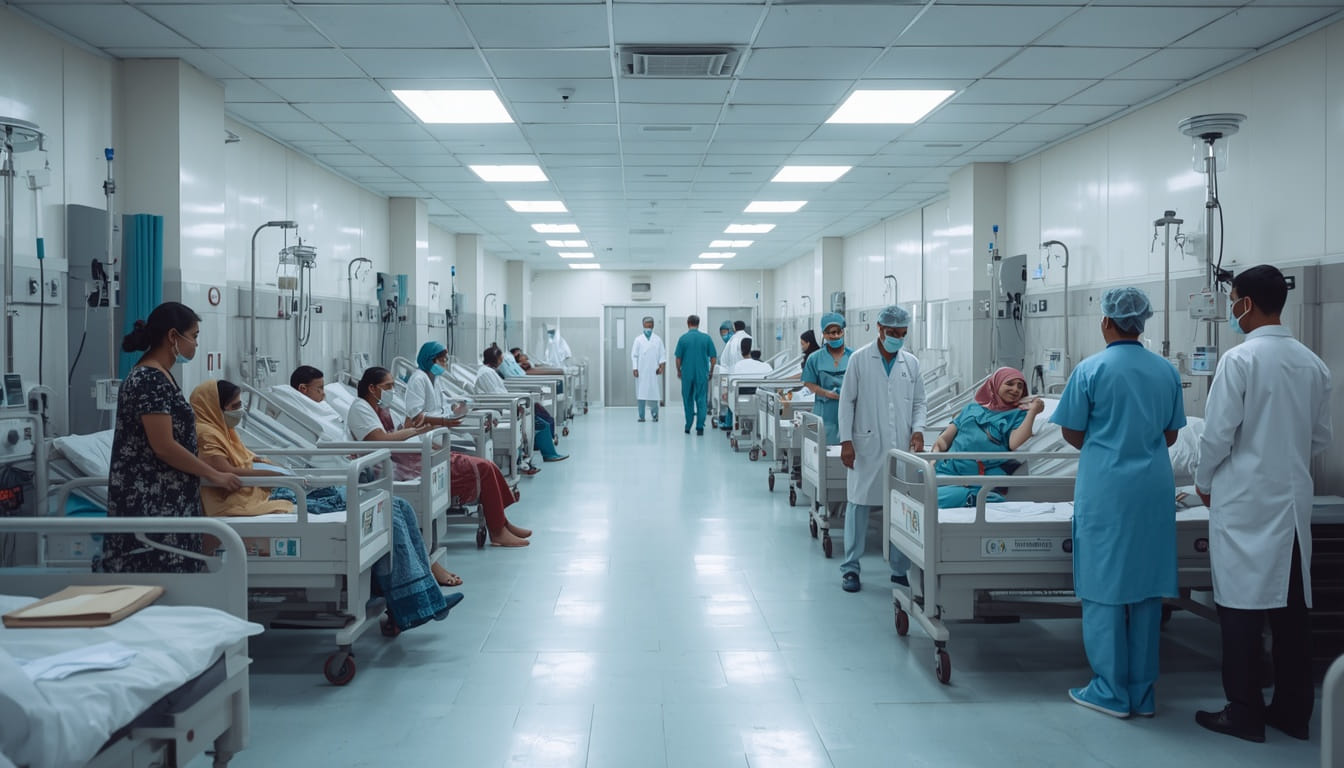

India’s healthcare financing system has recorded a significant shift towards government-supported expenditure, according to the National Health Accounts estimates for 2023–24 released by the Union Ministry of Health and Family Welfare.
The figures show that government health expenditure has increased substantially over the past decade, while the proportion of healthcare costs paid directly by households has declined.
Government health expenditure reached approximately ₹4.14 lakh crore in 2023–24, compared with around ₹1.30 lakh crore in 2013–14. Its share of total health expenditure increased from 28.6 per cent to 43.5 per cent during the same period.
At the same time, out-of-pocket expenditure declined from 64.2 per cent of total health expenditure in 2013–14 to 42.7 per cent in 2023–24.
Out-of-pocket expenditure refers to money households pay directly for medical services, medicines, diagnostic tests and other healthcare costs. A reduction in its share can indicate improved financial protection, although it does not automatically mean that treatment has become affordable for every household.
The estimates also show an increase in government health expenditure per person. Public spending rose from approximately ₹1,042 per capita in 2013–14 to ₹2,959 in 2023–24.
The growing public contribution reflects the increasing role of government institutions and financing arrangements in supporting healthcare services.
One notable aspect of the report is the contribution of state governments. They accounted for approximately 68 per cent of government health expenditure, while the Union government contributed around 32 per cent.
This distribution highlights the importance of state-level policy decisions and public investment in India’s healthcare system.
Total health expenditure stood at approximately ₹9.52 lakh crore in 2023–24, equivalent to 3.29 per cent of gross domestic product.
The estimates also indicate the importance of primary healthcare. Government expenditure on primary care reached approximately ₹1.53 lakh crore, reflecting the importance of accessible health services that can prevent conditions from becoming more serious.
Primary healthcare includes services such as initial medical consultations, preventive care, immunisation and basic treatment. Strong primary systems can help reduce pressure on specialised hospitals while allowing patients to receive treatment closer to their communities.
However, the report also shows why India’s healthcare financing challenges are far from resolved.
Despite the reduction in its share, household out-of-pocket expenditure remained substantial at approximately ₹4.06 lakh crore.
Medicines continue to represent a significant part of healthcare costs. The estimates indicate that pharmaceutical expenditure accounts for around 30.2 per cent of current health expenditure.
This creates a particular challenge for households managing long-term conditions that require regular prescriptions, consultations and diagnostic services.
Another issue involves outpatient treatment. Many insurance arrangements place greater emphasis on hospitalisation, while routine consultations, medicines and diagnostic tests can still create significant expenses.
Regional inequalities also influence healthcare access. Public health infrastructure and the availability of specialised medical professionals remain uneven across different parts of the country.
Urban centres generally have greater access to advanced facilities, while many rural communities face limitations involving infrastructure, staffing and specialist services.
The estimates therefore present a mixed picture. Higher government expenditure and declining household spending shares indicate progress, but the absolute financial burden remains considerable.
Improving the situation will require sustained investment in primary healthcare, affordable medicines, diagnostic services and stronger public hospitals.
The figures also underline the need for better coordination between central and state governments. As states contribute the larger share of government health expenditure, improvements in public healthcare will depend heavily on their ability to strengthen infrastructure and service delivery.
India’s healthcare financing system is moving towards a greater public contribution, but the next challenge is ensuring that the additional spending translates into accessible and affordable services.