

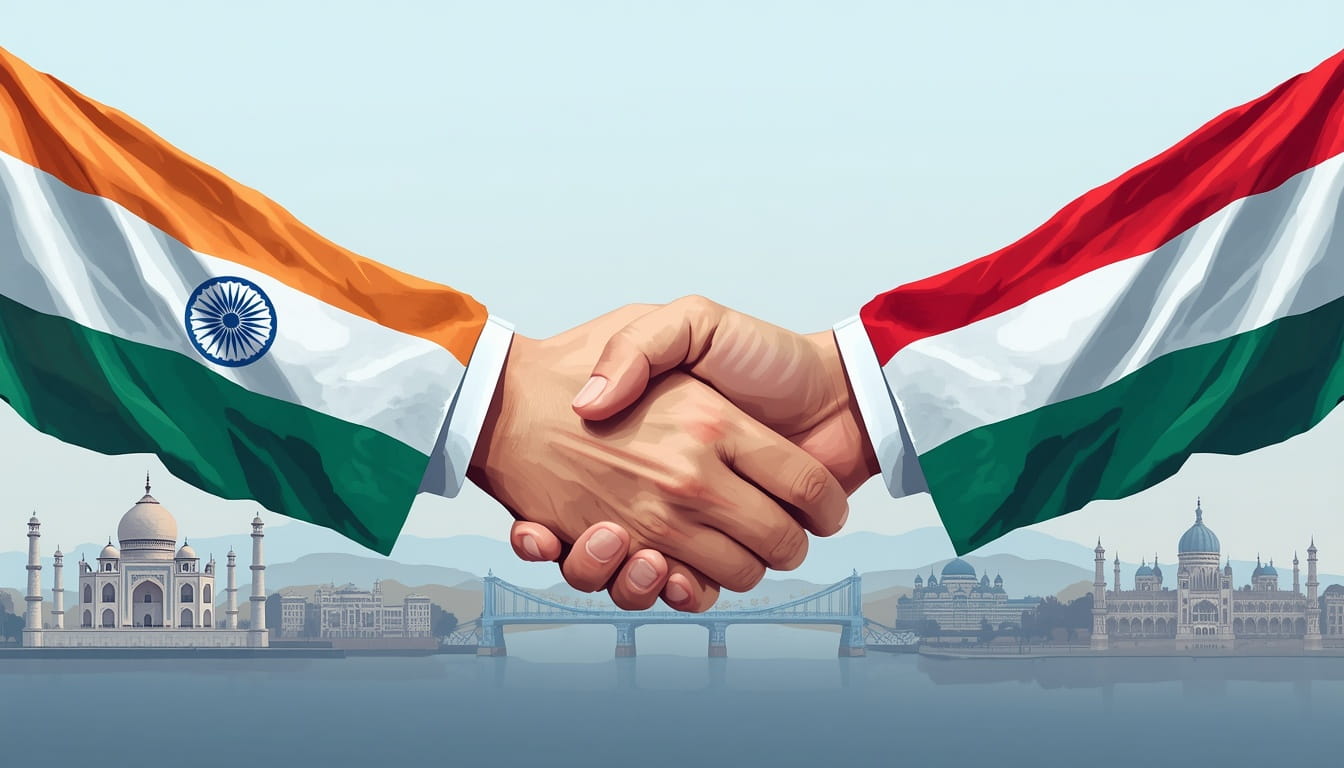

From November 4 to 6, Minister of State for Commerce and Industry and Electronics and Information Technology Jitin Prasada visited Hungary for talks with government officials, business representatives, and companies. The meetings covered trade, investment, and technology cooperation, with particular attention to manufacturing, pharmaceuticals, and research.
India Shipping News reported on November 7 that Prasada held talks with the Deputy Speaker of Hungary’s National Assembly and the country’s Minister of Science and Technology. They discussed bilateral relations, new technology and research, along with possible partnerships between companies and research institutions.
The minister also stopped at the Hungarian University of Agriculture and Life Sciences. Talks focused on agricultural research and technology, with sustainability in mind. Research becomes more useful to farms and businesses when universities adapt it to local conditions and commercial needs.
Pharmaceutical ties also came up during the visit. Prasada toured Gedeon Richter, the Hungarian drugmaker that operates manufacturing facilities in India through Richter Themis Medicare. According to the report, the meeting drew attention to established industrial connections and possible cooperation in manufacturing, research, development, and healthcare technology.
Foxconn’s Hungarian operations were visited with attention to electronics and digital infrastructure. The facilities reportedly produce equipment for data centers and network communications, along with AI server technology. Discussions centered on potential cooperation in electronics manufacturing, digital infrastructure, and supply chains designed to withstand disruption.
According to the report, Prasada spoke at an India–Hungary business seminar in Budapest on November 5. More than 100 business representatives attended, and companies from both countries discussed potential partnerships in fields such as electronics, pharmaceuticals, agriculture and emerging technologies. They also held business-to-business meetings to explore specific commercial opportunities.
Meetings like these give companies a clearer sense of one another’s markets, but they do not amount to investment commitments or signed contracts. A delegation can start further talks. Any project still has to prove commercially viable, meet regulatory requirements, secure financing, and attract customers.
The visit comes as India and the European Union deepen their broader engagement. Stronger trade links with Europe may shape how companies plan, though particular India–Hungary projects will rest on individual business decisions and bilateral agreements. The report connected the trip to the wider India–EU relationship while treating Hungary as a partner in its own right.
Hungary gives Indian companies a foothold in Central European production and business networks, while Hungarian firms gain access to India’s large market and growing industrial base. The visit focused on electronics, pharmaceuticals, agriculture, and research—areas that call for different arrangements, including manufacturing partnerships, shared expertise, and closer supply-chain coordination.
The Indian delegation met representatives from Hungary’s Chamber of Commerce and Industry, along with its agencies for export and investment promotion. The discussions aimed to put businesses in touch with groups that help companies trade and invest. The reported B2B meetings opened the door to possible deals; their economic effect will depend on what happens next.
A separate meeting with members of Hungary’s Indian community examined how diaspora ties shape relations between the two countries. These connections encourage cultural exchange and give businesses a clearer sense of local markets, but trade still depends on concrete partnerships.
The visit ended with both sides stressing closer economic and technological ties. No package of signed agreements was disclosed; for now, the tangible results are discussions and new business contacts. The clearest signs of follow-through will come from companies, research partnerships, and investment plans that convert those meetings into lasting commercial activity.