

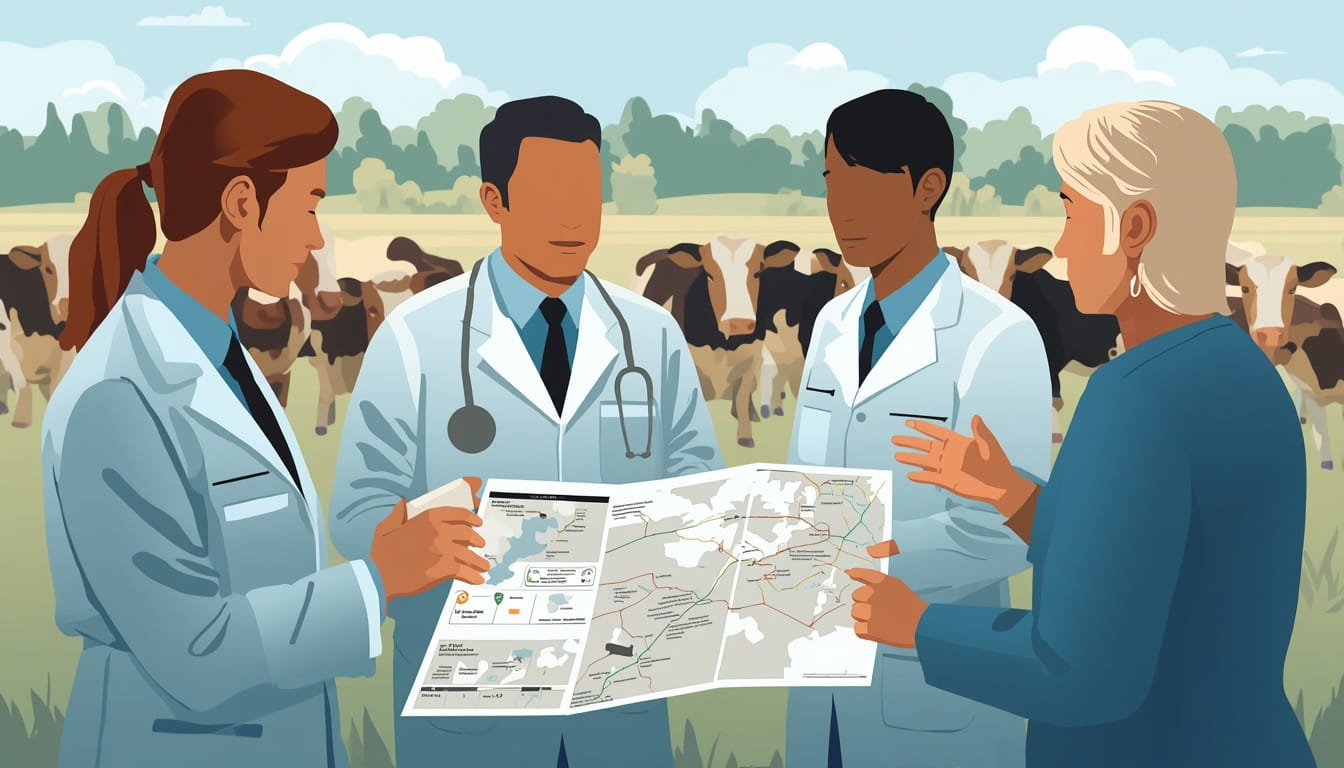

India has held a national exercise to test how authorities would respond if the Foot-and-Mouth Disease (FMD) SAT-1 strain were detected in the country. The Department of Animal Husbandry and Dairying and the ICAR-National Institute of Veterinary Epidemiology and Disease Informatics organised the two-day tabletop exercise, which concluded this week.
SAT-1 has not been reported in India, according to the announcement carried by IANS. Officials said it is being monitored because the strain has spread beyond Africa into parts of West Asia. The exercise was designed as a preparedness measure, not as a response to a confirmed outbreak in India.
The sessions used simulated outbreak scenarios to examine how quickly authorities could identify a possible case, confirm it through laboratory testing and coordinate containment. Participants considered disease detection, epidemiological investigations, animal movement controls, emergency vaccination strategies, risk communication and coordination between central and state agencies.
A total of 83 participants took part, representing 25 states, three Union Territories and organisations involved in animal health. These included state animal husbandry departments, ICAR institutes, veterinary diagnostic laboratories, veterinary universities, vaccine manufacturers and defence and border-guarding agencies. Bringing these groups together matters because a transboundary animal disease can involve multiple jurisdictions and require a response across surveillance, transport, testing and vaccination systems.
Foot-and-mouth disease is a contagious livestock disease that can affect animals such as cattle, buffalo, sheep, goats and pigs. Preparedness depends on detecting unusual illness quickly, confirming the cause and sharing information with the agencies responsible for containing spread. In a simulated exercise, officials can test how responsibilities and communications work before a real emergency puts those systems under pressure.
The exercise’s theme—“Detect Early, Confirm Fast, Contain Together”—summarised its focus. Early detection gives authorities more time to investigate and respond. Rapid confirmation helps distinguish suspected disease from other causes. A coordinated response can support decisions about animal movement, vaccination, laboratory capacity and public communication.
Officials also highlighted the importance of risk-based surveillance and early-warning systems. Surveillance helps authorities identify where and how to look for disease, while epidemiological intelligence can help assess potential pathways of introduction and spread. Laboratory readiness is another key component: response plans depend on diagnostic facilities having the capacity and procedures to handle samples and deliver results in a timely way.
The tabletop exercise also examined emergency vaccination planning and border vigilance. These measures need to be adapted to the disease situation and guided by veterinary authorities. The exercise itself does not mean that vaccination has been initiated or that restrictions are in place; it was a planning activity based on hypothetical scenarios.
For farmers and livestock businesses, disease preparedness can have economic as well as animal-health implications. An outbreak can disrupt animal movement and trade, create costs for testing and control, and affect livelihoods. A clear response framework can help reduce confusion if authorities need to act quickly.
The organisers concluded by calling for stronger preparedness at national and state levels and improvements to diagnostic infrastructure, including regional FMD laboratories and disease diagnostic laboratories. Any future action would depend on surveillance findings and official guidance.
The exercise is best understood as a readiness check. It brought together agencies that would need to work in concert during an emergency and tested parts of the response chain in advance. With SAT-1 not reported in India, the immediate message is preparedness: monitoring, laboratory capacity and clear coordination are being treated as important tools for protecting livestock and the wider agricultural economy.