

In October 2025, India’s economy exhibited a notable shift in the growth rates of various sectors. The services sector was growing more slowly, while the manufacturing sector was growing much faster. This complex change illustrates how Asia’s third-largest economy is confronting new challenges and opportunities.
Services Sector: Slowing but Still Expanding
Highlighting problems also faced by the services sector, which accounts for more than half of India’s economy, the HSBC/Markit Service Purchasing Managers’ Index (PMI) eased in the last month. The PMI fell to 58.9 from 60.9 in September, marking the slowest pace of expansion since May 2025. Although this reading is comfortably in expansionary territory (above the crucial 50.0 threshold that separates growth from contraction), it has triggered alarm bells among stakeholders in the service sector.
You can thank a few different things for that moderation. Inclement conditions, such as heavy rain, also disrupted business operations in some regions of the country. There were also competitive pressures in the sector, and new business inflows grew at a slower pace. While demand conditions remained robust, the new business sub-index dropped to a five-month low. However, even as these headwinds persisted, robust client footfall and the Goods and Services Tax (GST) support offered some respite to activity.
Input costs eased at their weakest rate in more than a year, offering some relief to companies, while output charges rose at the slowest pace in seven months as price pressure eased. The demand for Indian services from abroad also increased, albeit at a slower pace than in previous months. Analysts warn that , even as the services sector proves robust, these conditions make clear the need to develop strategies for maintaining momentum in times of adversity.
Manufacturing Sector: Picking Up Speed
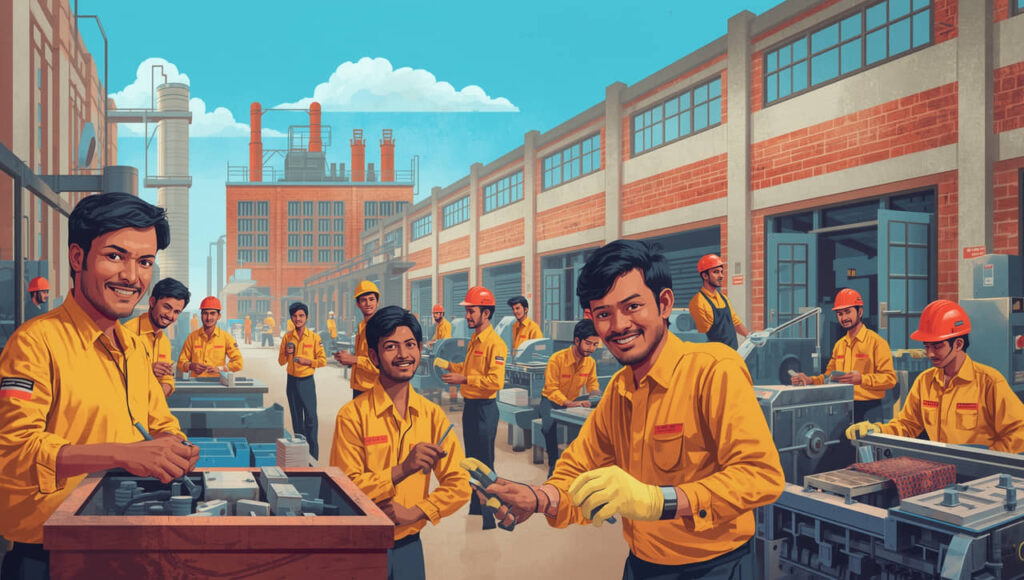
Unlike the services sector’s retrenchment, manufacturing in India strengthened in October 2025. The HSBC India Manufacturing PMI rose to 59.2 in October from 57.7 in September, indicating a more rapid expansion in factory activity. This expansion was underpinned by solid domestic demand and improved new orders, encouraging some firms to bet on the momentum of reform from GST and market growth.
Manufacturing subsectors, including basic metals, machinery and equipment, motor vehicles and automotive components, as well as electrical equipment, showed significant positive growth during the fiscal year. Even export orders for manufactured goods grew, though not as rapidly as in earlier months. There are, however, several people already taking up jobs in the construction sector (which saw employment growth for the twentieth consecutive month), presumably because it represents one of the most active areas of hiring.
The incremental manufacturing boost is attributed to government measures, such as the Production-Linked Incentive (PLI) scheme, which aims to create industrial capacity and diversify in 14 identified sectors. Prospects also improved in the manufacturing sector, due to rising foreign direct investment and global supply chain relocations away from China. This surge in manufacturing output also contributes to India’s overall target of increasing the manufacturing sector’s contribution to GDP , thereby building economic resilience and creating jobs.
Economic Outlook and Implications
India’s headline PMI, which encompasses both manufacturing and services, eased slightly from 61.0 in September to 60.4 in October, although it still indicates strong overall economic activity. The nation’s GDP growth is forecast at 6.7% in the current fiscal year , up from a 6.5% expansion last year, as easing inflation and continued demand across sectors prop up activity.
The slow growth of the services sector suggests that we should be careful, but the growth of the manufacturing sector suggests that the economy is growing in different ways. Policymakers should focus on reducing competition and addressing infrastructure issues in the services sector, while maintaining incentives and reforms that support the manufacturing sector.
In short, the October data indicate that India’s economy is in a balanced yet evolving phase. Strong growth in manufacturing is offsetting a slowdown in services, which is keeping India’s economic growth on track for 2025.