
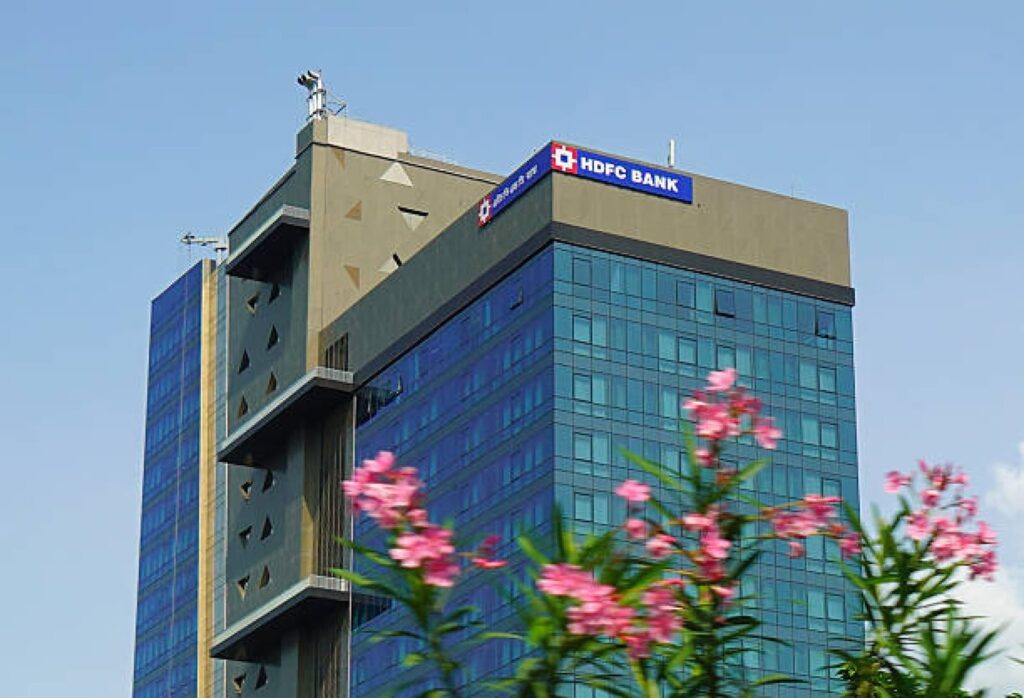

An HDFC Bank share sawhit its 52-week low of ₹722 on the same day extending a perennial fall that has wiped nearly over ₹4 lakh crore off the top private lender’s market cap since January 2023. The stock is now down 27%+ in 2026, keeping a lid on investor appetite for India’s largest private sector lender.
Stock Falls to Fresh Low
Shares of HDFC Bank fell to an intraday low of ₹722 at the National Stock Exchange on Wednesday (August 12). The stock then lost some ground but made a slight recovery this session, coming back at around ₹725.30 by 3 p.m., down about 0.5% from the previous close.
It fell most recently after the stock closed lower in seven of eight trading sessions logged throughout August. HDFC Bank’s share price is down to ₹722 from close to ₹991 at the start of 2026, a slide of over 27% year-to-date.
HDFC Bank has emerged among the biggest laggards in large-cap banking stocks this year with the continued weakness.
₹4 Lakh Crore Market Value Erased
The steep fall in the price at which shares are trading has significantly hurt HDFC Bank’s market cap. On Mar 1, 2026, the bank had a market capitalization of ₹15.26 lakh crore; as per estimates provided to the BSE. It had dropped below ₹11.18 lakh crore on August 12, losing over ₹4 lakh crore in the process
While the bank’s share price fell to £10 billion (a decline of around 30 per cent) in percentage terms, the reduction in market capitalisation has been in line with this move. As long as the number of shares outstanding usually doesn’t fluctuate much, this means a decline in stock price translates to an immediately lower market value for the company.
Although this erosion occurred, it still held up as one of the most valuable financial institutions in India. As of August 12, it was still worth more than ICICI Bank whose market capitalisation was pegged at around ₹10.21 lakh crore
Weak Q1 FY27 Performance
A major reason for the pressure on the stock has been disappointment of investors with the Q1FY27 performance by HDFC Bank. Focus has been on net interest margins pressure, slow earnings momentum and uncertainty on how quickly the bank would be able to improve profitability post its merger with HDFC Ltd.
Net interest margin (NIM) is the difference between how much money a bank gets from the loans that have been given and what they pay as an interest on those deposits. We anticipate that as NIM contracts, the banks profitability on new lending is squeezed (though if costs and credit expenses remain elevated together with a high level of mortgage lending to GDP), it might not have a significant impact overall at this stage.
As a side-note, investor anxiety peaked further after HDFC Bank suffered a record drop in its stock price over the negative commentary and market reactions to HDFC Bank’s Q1 FY27 result. In July, the share price is said to have plunged over 5% in one session with a consequent single-day erosion of ₹74,250 crore in the market value of the bank.
Leadership and Governance Concerns
Another big factor behind the sell-off was Atanu Chakraborty’s resignation as part time chairman in March 2026. The change at the top caused alarm around governance, stable management and where exactly the bank is heading.
Heavy selling pressure on the stock traces back to the chairman’s exit. In March, shares slumped by over 10% in four trading sessions and the market capitalisation of the bank on an average fell by around ₹1.34 lakh crore in that period.
Keki Mistry then took over as chairman, but the change did little to restore confidence among investors. The market usually worries when a senior-management change occurs unexpectedly, requiring investors to consider the implications for strategy, succession planning and corporate governance.
Foreign Investor Selling
The HDFC Bank shares are also under pressure due to persistent selling by Foreign Institutional Investors or FIIs. FIIs are dominant players in large-cap stocks targeting sustained selling, as the share of domestic investors remains weak.
The wider selling pressure has been tied to governance and changes at the top as well as earnings growth and whether the bank can improve margins.
The selling has taken place in a difficult environment for financial stocks, highlighted not only by worries over interest rates and bond yields but also liquidity conditions and general global market volatility.
Credit Suisse Bond Mis-Selling Issue
A further worry raised earlier this year concerned allegations of mis-sale of Credit Suisse AT1 bonds. A report also said that HDFC Bank asked three senior executives to step down from the bank, for allegedly being involved in the matter. The turn of events contributed to the uncertainty over internal controls and governance at the lender.
Even if these kinds of reports do not have to immediately imply any change in loan book or capital position, they could weigh on investor confidence as banking valuations are very much predicated on trust-driven factors such as transparency and perceived quality of risk management.
Broader Market Pressure
Also Read: How HDFC Bank’s fall happened during a period of turbulence in Indian and global markets. Banking stocks have struggled with changes in interest-rate expectations as well, rising bond yields and geopolitical tensions/concerns about growth.
With an outsized weighting in benchmark indices like the Nifty 50 and Sensex, HDFC Bank is capable of moving whole markets. Conversely, large institutional ownership can also make the selling lose sharper when investors decrease their exposure to bulky financial stocks.
We reactivated our short on HDFC Bank earlier this month after bank share weakness and volatility pushed HDFC to a second 52-week low of ₹726.75 in April.
Investor Sentiment Weakens
The prolonged decline has affected the perception of HDFC Bank as a relatively defensive large-cap investment. Investors typically value major private-sector banks for their balance-sheet strength, scale, asset quality and long-term earnings potential.
However, the stock’s weak performance in 2026 has raised questions about:
- The pace of post-merger integration benefits.
- Pressure on net interest margins.
- The bank’s ability to grow deposits efficiently.
- The impact of leadership changes.
- Corporate governance and internal-control issues.
- Foreign institutional investor sentiment.
- The outlook for earnings growth and return on equity.
The weakness has also frustrated long-term investors because the stock has failed to deliver the performance many investors expected from one of India’s largest banking franchises.
What Investors Will Watch Next
Investors are likely to focus on several indicators in the coming quarters:
- Net interest margins: Any recovery in margins could improve expectations for earnings growth.
- Deposit growth: Strong deposit mobilisation will be important for supporting loan growth without increasing funding costs excessively.
- Credit growth: Investors will assess whether loan growth remains healthy across retail, corporate and commercial banking segments.
- Asset quality: Slippages, provisions and gross non-performing assets will remain key indicators of balance-sheet strength.
- Return on equity: The market will want clearer evidence that the bank can improve profitability and generate stronger returns on shareholder capital.
- Management stability: Investors may seek reassurance that the bank has a clear leadership and succession framework.
- Foreign investor activity: A reduction in FII selling could help stabilise the stock, while continued outflows may keep the shares under pressure.
Risks and Possible Recovery Factors
A sustainable turnaround in HDFC Bank’s stock can be contingent upon steady margins, healthy asset quality, accelerated earnings growth and more transparency on governance and leadership. Sentiment could also receive a boost from positive quarterly results or abating institutional selling.
However, data showing the margins remain under pressure, deposit costs increase, earnings disappoint or governance worries persist could see further downside risks. Market-wide volatility and movements in interest rates could be another effect on the stock.
Stock dropping to a 52-week low does not necessarily make the stock a bargain. As an investor, you typically have to assess earnings forecasts, book value and asset quality before determining if the decline suggests a buying opportunity versus deeper fundamental issues.
Conclusion
HDFC Bank has tumbled to ₹722. The shares are down over 27% this year, having lost ₹4 lakh crore+ (the market capitalisation) due to a toxic cocktail of earnings concerns, margin pressure, leadership uncertainty, governance worries and institutional selling.
The next several quarterly results will be key. A genuine kick-up in margins, deposits, profitability and management confidence could provide the foundation for a recovery, but continued softness here may mean keep the stock under pressure. The above is for informational purposes only, not investment advice.