

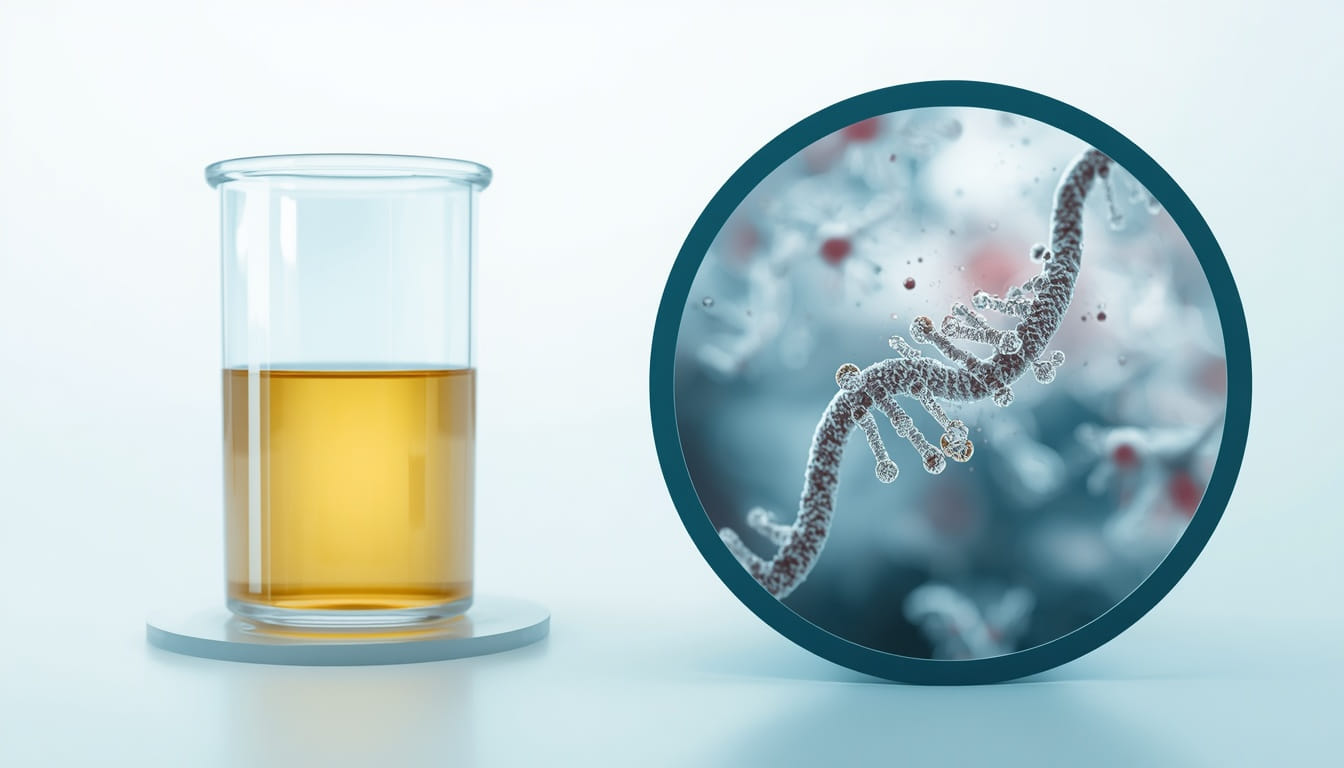

A urine-based test that examines RNA molecules showed promise for detecting bladder cancer in a proof-of-concept study, including some early-stage cases. The findings are encouraging, but the test is not yet ready for routine use in clinics.
A report published by The Indian Express on November 8 describes research published in Nature Medicine on October 2. Researchers analysed samples from 515 cancer patients and healthy individuals.
The study reported 95% sensitivity among the samples examined. In simple terms, that means the test detected about 95 out of every 100 cancer cases in the study group.
Looking for RNA signals in urine
The approach analyses cell-free RNA molecules found in urine. RNA carries information about gene activity, so changes in these molecules may reveal patterns associated with cancer.
The researchers’ approach differs from tests that focus mainly on tumour DNA circulating in blood. Because urine passes through the bladder, it can contain molecular material released by cells in that organ.
That makes urine an appealing sample for bladder cancer research. A non-invasive collection method could be easier for patients than procedures that require instruments to examine the bladder directly.
The research also suggests the RNA signals may provide information about tumour type and the risk of cancer returning after treatment. Researchers are exploring whether related methods could eventually help investigate kidney and prostate cancers as well.
What the sensitivity figure does—and does not—mean
A 95% sensitivity result is not the same as saying the test is 95% accurate for everyone who takes it. Sensitivity describes how often a test identifies disease among people who have it in the studied group.
It does not, by itself, tell us how often the test may produce a positive result in someone without cancer. That measure, along with performance in broader patient groups, is important when doctors assess whether a test is useful in real-world care.
The study is described as proof-of-concept. The results need validation in larger and more diverse populations before clinicians can know how consistently the test performs in routine practice.
Cystoscopy remains an important tool
Cystoscopy, in which a thin camera is passed through the urethra to examine the bladder, remains a key diagnostic procedure. The new urine test has not been established as a replacement.
If future research confirms its performance, a urine test might help doctors decide which patients need further investigation or help monitor people after treatment. But that role would need to be defined through clinical studies and medical guidance.
The possibility of reducing unnecessary invasive procedures is one reason researchers are interested in the technique. Any decision to use it would depend on how well it detects cancer, how often it flags disease incorrectly and whether it improves decisions for patients.
For people concerned about symptoms or bladder cancer risk, the findings are not a reason to delay medical care or substitute an experimental test for a clinician’s advice. The study marks an early step toward a potential diagnostic tool, not a test currently available for routine screening.