

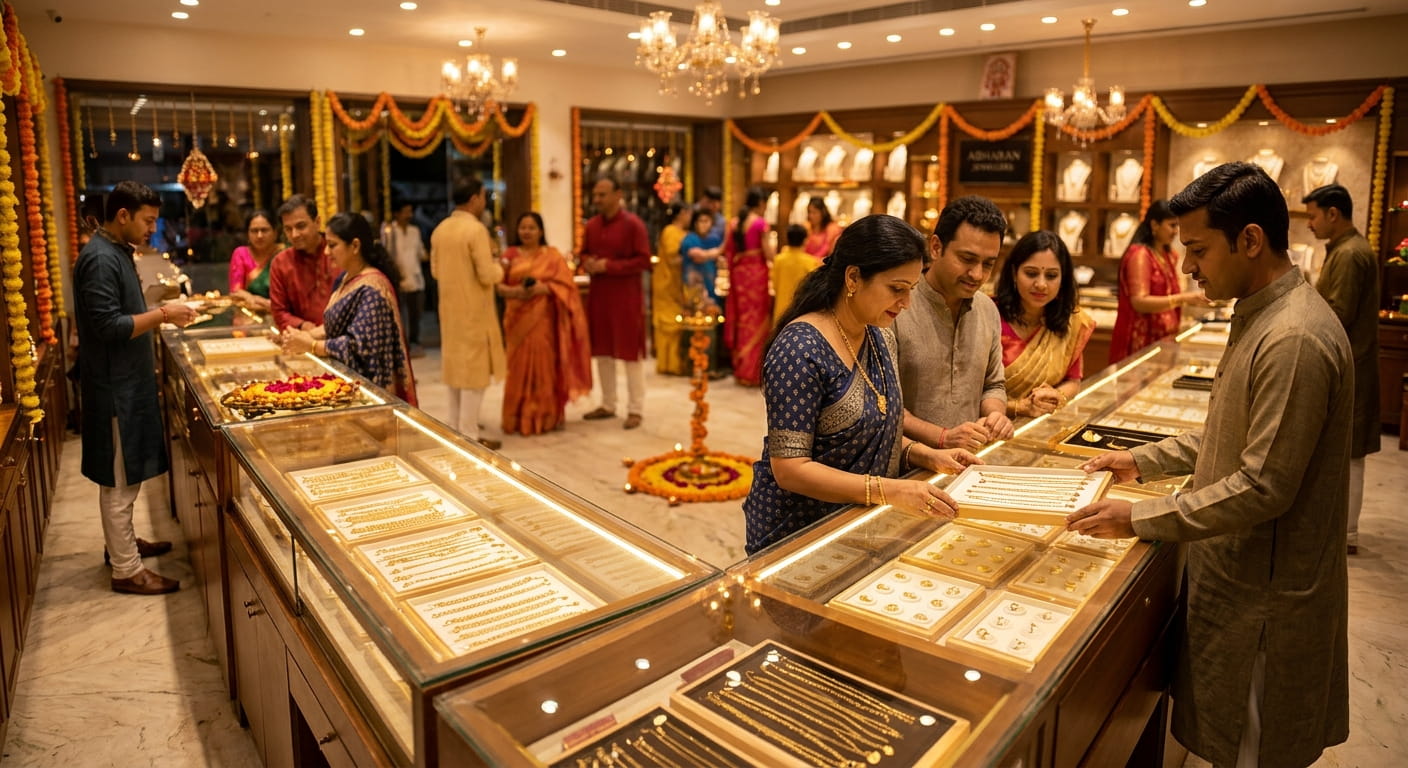

Gold and silver purchases held up well during Dhanteras. Early industry estimates put gold sales at about ₹60,000 crore by value, and jewellers saw more customers in their showrooms along with a rise in advance bookings. With precious-metal prices still high, buyers often chose lighter jewellery, smaller coins or lower-carat designs.
CNBC-TV18 reported the figures on November 7, drawing on estimates from the All India Gem and Jewellery Domestic Council (GJC) and remarks from retailers. According to the GJC, the value of gold sales increased 15–20% year on year, while the amount sold may have stayed roughly the same as last year. Higher prices, rather than greater volume, accounted for the rise in total purchase value.
Value and volume are not the same thing. When gold prices rise, jewellery sellers can record higher sales in rupees even if customers purchase the same amount by weight. So, the estimate points to greater sales value—not necessarily a substantial increase in the quantity of gold bought.
The GJC expects silver sales to grow, with value rising by 30% and volume by 10%. These are preliminary industry estimates, not audited final figures; other trade groups and retailers may report different results because they cover different periods and use different methods.
The report attributed part of the consumer interest to gold and silver prices pulling back from their earlier peaks. On Dhanteras, both metals still cost more than they had a year before, yet prices were below their January highs, which may have made some purchases seem more manageable. Timing and spending levels respond to price changes, but household budgets and wedding plans matter too.
Retailers reported interest in a broad mix of jewellery and precious-metal goods, particularly lightweight pieces such as pendants, bangles and chains, as well as small gold and silver coins and silver artefacts. To keep spending under control while buying something for the festival, some customers chose lower-carat jewellery. Certain retailers also saw demand for 18-, 14- and 9-carat designs.
Exchanging old gold also helped drive purchases: customers could put existing jewellery toward a new piece, cutting the cash they needed to pay. Retailers saw this most often in smaller cities, where wedding and temple jewellery also drew strong interest.
The market also covered digital gold, jewellery, and investment products. According to the report, the World Gold Council’s India chief said retail buyers purchased jewellery, coins, bars, exchange-traded funds, and digital gold. Each option comes with its own purpose and costs, so buyers should check the terms before committing. Digital gold, in particular, differs from owning jewellery or physical coins.
The report drew on estimates from individual retailers, and the figures differed sharply. One jeweller put jewellery sales growth at about 10%; other businesses recorded larger gains in either sales value or volume. These numbers describe those companies alone, not necessarily the market as a whole.
Dhanteras draws intense attention because it ranks among India’s busiest periods for buying jewellery and precious metals. Still, a strong day—or even several strong days—cannot prove that households have permanently changed their spending habits. Sales over the coming months will depend on the wedding season, price expectations and consumer confidence.
Early Dhanteras signals suggest that shoppers remained interested, even as prices climbed. Many seemed to balance tradition and investment with tighter budgets, opting for lighter designs and lower-value purchases. Once the industry releases its final figures, it will become clearer whether the rise in value also meant more items were sold or simply tracked higher precious-metal prices.