

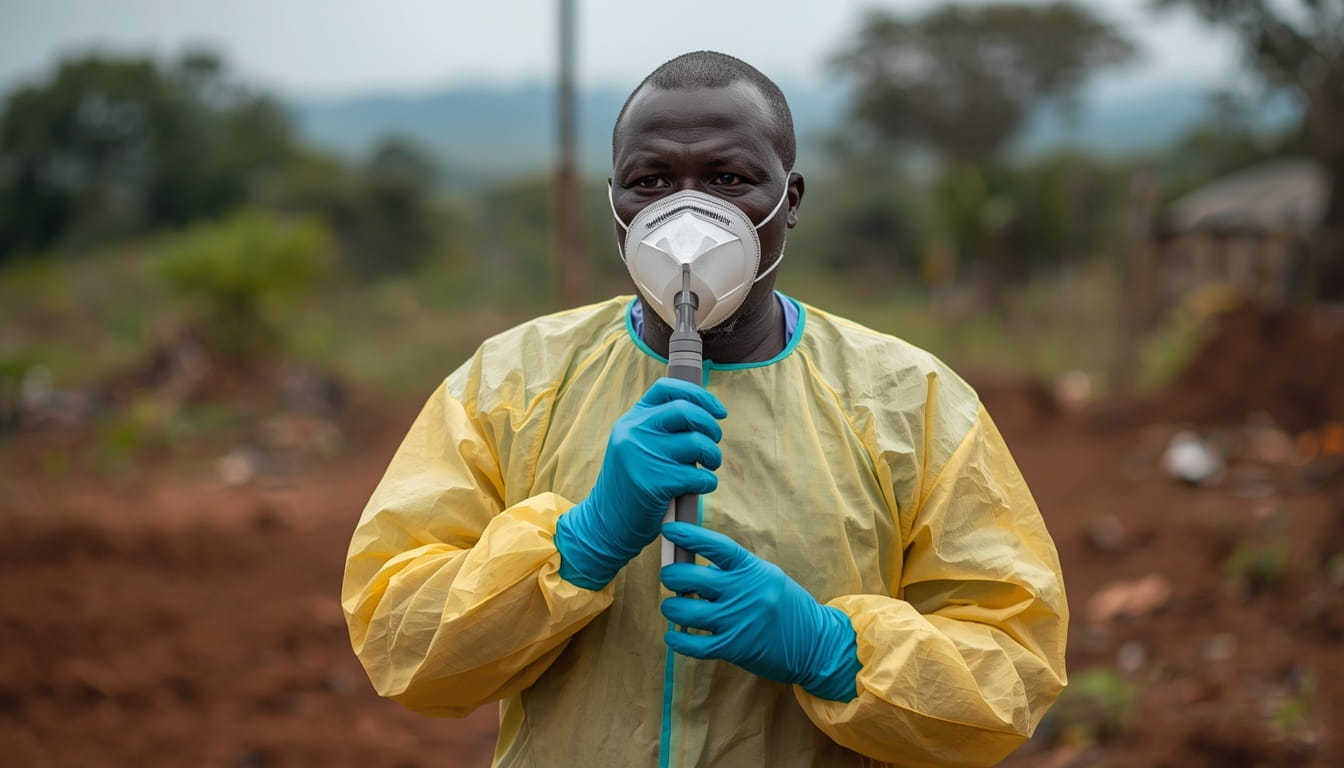

On Wednesday, Nov. 11, the Government of the Democratic Republic of Congo reported that its current Ebola epidemic had surpassed 11,000 confirmed cases. According to the most recent report from the DRC’s Ministry of Health, which was published on Wednesday evening, there were 11,042 reported cases of Ebola in the DRC and 5,387 reported fatalities associated with the disease. This is the largest and most fatal Ebola outbreak to occur in the DRC since the country first experienced an outbreak of Ebola in 1976. However, these numbers represent only those reported by the DRC Government and could potentially be altered as the health authorities continue to investigate additional suspected cases and revise previous reports.
An outbreak of the Bundibugyo virus was first identified in mid-May. It is now active in 8 of the 26 Congolese provinces as of AP’s reports. AP also reported that there are currently no vaccines or treatments available for the virus. Therefore, early identification, provision of supportive health services and community-based public health interventions are particularly critical. The Associated Press report published on NPR used the data provided by the health ministry and stated that the response teams face many challenges.
Access challenges complicate containment
As per the Associated Press (AP), health authorities have had difficulty accessing communities affected by the conflict due to the presence of armed groups, inadequate health system, lack of proper road access, and a lack of confidence in the health sector caused by false information. Concerns about whether medical teams will be able to safely enter areas such as Ituri and North Kivu, which are the main focus of the conflict, have been increased due to the violent events in those regions. Some communities’ health care facilities and personnel have been targeted for attack.
These barriers have practical implications. For example, a patient may experience difficulty traveling to a health facility for treatment; likewise, a public health worker may face challenges investigating potential cases of disease transmission among contacts or providing timely information. Furthermore, individuals who do not trust government communications or fear being seen at health facilities will likely delay their decision to seek medical attention. This delay will complicate efforts to control the outbreak even if the necessary resources (health workers, etc.) and plan exist.
Responders must have the support of local officials/communities, and the availability of PPE (Personal Protective Equipment), transportation, and trained personnel. By clearly communicating how the disease is spread and what type of healthcare is available, you may be able to develop trust. However, communication by itself will not alleviate insecurity or shortages in health facilities. How well a response occurs is dependent upon local circumstances, and whether or not aid workers are able to function with no threats.
Why this outbreak is unusually severe
This latest outbreak is now the second-largest Ebola epidemic on record, based on the AP report. The largest and deadliest Ebola epidemic on record was in West Africa from 2014 through 2016. In total, approximately 28,000 people were infected with Ebola, resulting in over 11,000 fatalities. While the current epidemic is not as widespread as the 2014-2016 epidemic, AP reports that the current epidemic is growing at a faster rate in terms of number of cases and fatalities since the outbreak was first identified.
The high reported percentage of fatalities — over 5,300 deaths out of 11,042 reported infections — emphasizes how severe these numbers are. However, this percentage may vary as investigators continue to report additional cases; evaluate the outcome of those cases; and classify them. This number should not be used as an accurate prediction of what will happen to each infected individual. There are numerous variables that affect individual results, such as when an individual receives medical attention and their overall health.
Ebola epidemics have occurred many times since the discovery of the virus in 1976. Each epidemic has involved various viral strains and contexts. Unlike epidemics that involved species for which a vaccine or other specific treatment has been created, there is no known vaccine or treatment available for the Bundibugyo virus. However, health care providers may still provide supportive care, isolate potential cases, and employ infection control measures.
Cross-border concern and information gaps
The Associated Press reported that the Ebola virus was spreading to other African nations, such as Uganda, Kenya, and Nigeria. This fact demonstrates the need for regional collaboration, which includes sharing information, providing screening services, if possible, and preparing for outbreaks at hospitals. The existence of these facts alone does not demonstrate whether there are many people infected with Ebola in each of the previously mentioned countries or whether residents in other parts of the world will experience the same degree of exposure as those in West Africa. Public Health Authorities should give country-specific updates.
Information about outbreaks changes as the testing and monitoring process improves. Outbreak case numbers increase due to an increase in the number of cases of the disease, however, outbreak case numbers also increase due to investigators identifying additional cases that have gone unnoticed. The number of deaths associated with an outbreak can also be updated after reviewing the records. Therefore, readers of these articles must utilize the most recent information provided by the respective health departments and the World Health Organization; additionally, readers must remember to consider the date of the reporting of the data as opposed to viewing it as a static total.
The World Health Organization (WHO) coordinates the global response to health emergencies and issues updates about outbreaks. Both official updates from national ministries of health and current disease information/emergency alerts published by the WHO should be reviewed when evaluating the severity of an outbreak. When there are discrepancies in data reported by the WHO and national ministries of health, reporters should document these differences instead of simply reporting one set of numbers with no supporting evidence.
The response depends on trust and safe access
The most urgent task at present is to limit the spread of disease through community-wide actions, such as limiting public gatherings and encouraging individuals to practice good hygiene. In addition to reducing the risk of transmission, these measures will also allow for the provision of essential medical services. However, achieving this goal will require adequate protection of health care providers, robust systems for tracking and monitoring potential cases, adequate supplies of personal protective equipment (PPE), sufficient capacity to isolate infected individuals, and active engagement with affected communities. Furthermore, in order to gain trust from communities that may have been previously harmed by actions taken by authorities or external agencies, local residents should be given a significant voice in developing responses to public health emergencies.
The total number of cases reported is an indicator of the extent to which the disease has spread, however, it does not provide an accurate picture of the overall human cost. Families can become fragmented, community health centers can experience overcrowding, and additional types of health care services can be disrupted. In addition, communities experiencing conflict and lack of transportation infrastructure may experience difficulty receiving regularly scheduled medical treatment.
Authorities said Monday they wanted to see a cessation of violence in impacted zones so that health care providers could treat infected individuals. It is unclear if their request will result in improved safety for providers to provide care. Indicators to monitor are; revised case numbers, how well contact tracing works, if health care provider’s are safe while providing care and whether or not community members are able to receive treatment. As long as these factors remain unchanged, then the outcome of the epidemic depends upon both medical resource availability and community confidence/security which allows for treatment.