

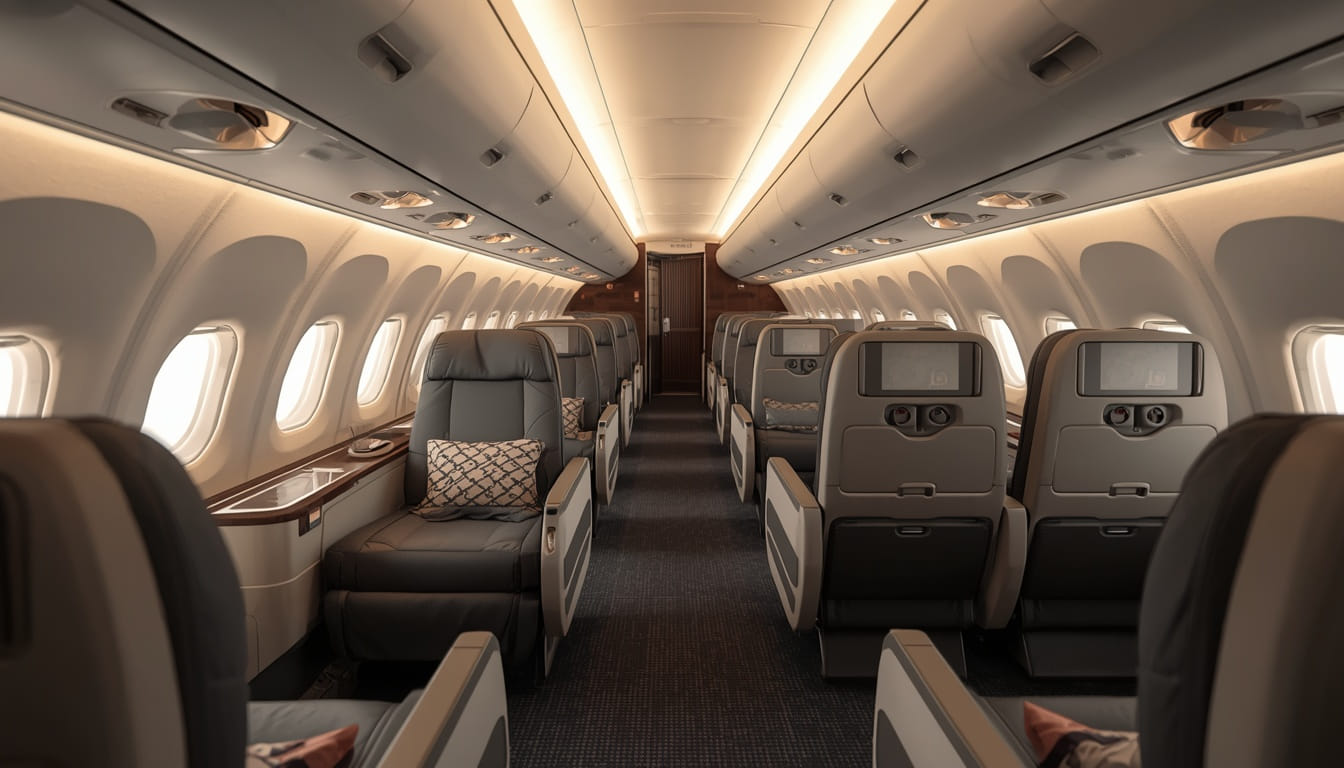

Airlines are putting more emphasis on premium cabins, upgraded lounges and paid comfort options as they look for revenue beyond standard economy tickets. The shift comes as higher fuel costs put pressure on airline finances and carriers compete for travellers willing to pay more for a better experience. Airlines are investing in premium seats, improved food and airport amenities.
Some carriers are also expanding paid options within economy, such as seats with extra legroom or locations near the front of the cabin.
More revenue from fewer seats
Premium seats can take up considerably more space than economy seats. An aviation economics professor cited in the report said a business-class seat may occupy the area of up to four economy seats, while selling for several times the price.
That trade-off can make premium cabins attractive to airlines, particularly when customers are willing to pay for additional privacy, comfort or service. American Airlines reported an 18.5% year-on-year rise in premium revenue in its most recent quarter, according to the coverage.
Airlines are also charging for selected benefits that were once less common as separate purchases. These can include additional legroom, faster boarding or seats positioned to help passengers leave the aircraft sooner.
Comfort options spread through economy
The move toward premium travel is not limited to business and first class. Airlines are trying to offer more choices within economy so passengers can pay for specific conveniences without buying a full premium ticket.
United Airlines announced an Economy Plus option designed to let travellers avoid having someone seated in the middle seat. The report says the service is expected to begin on selected flights toward the end of 2026.
JetBlue has also announced BlueFirst, a first-class service for domestic routes. Meanwhile, airlines continue to invest in lounges, meal options and onboard entertainment as they compete for travellers who value the overall journey.
These offers create a wider range of prices and experiences. They can provide more flexibility for passengers, though the final cost of a trip may rise when several optional services are added.
Capacity is changing
Premium seating has grown faster than mainline economy capacity on US flights since 2020, according to data cited in the report. United says it has more than doubled its premium-seat capacity since 2015, while Delta is upgrading its Delta One service with changes to food, wine and entertainment.
Some airlines are considering cabin layouts with a much larger premium share. Delta has discussed the possibility that premium seats could eventually account for as much as 70% of capacity on some aircraft, although this is not a universal industry target.
For now, economy seats remain a central part of airline operations. The question is how airlines balance space for lower fares against the higher revenue available from customers willing to spend more.
What passengers should watch
Rising premium investment may improve comfort for travellers who can afford upgrades, while also changing the number and style of economy options available on some routes. Passengers should compare the full cost of a ticket, including seat selection and other add-ons, rather than relying only on the base fare.
For airlines, the strategy is a bet that demand for more personalised travel can offset cost pressures. Whether it works will depend on fuel prices, consumer spending and how much travellers are willing to pay for added comfort.