

The discovery
If ozone-rich air from tropical regions can ascend high into the upper atmosphere, this could have implications for how both upward propagating energy and downward transported species such as methane are mixed in the stratosphere.
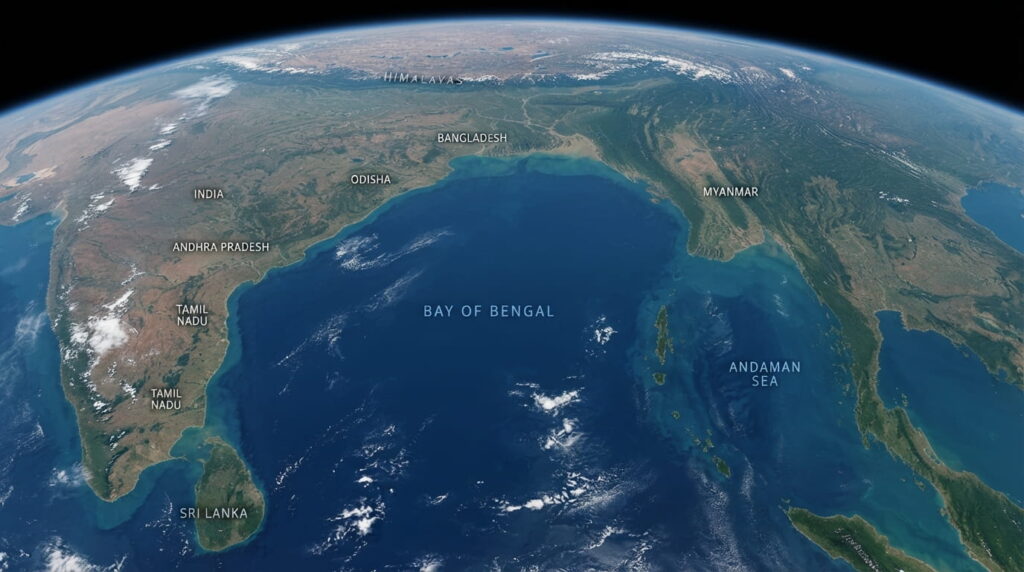
The unusual ozone enhancement was observed at an altitude of nearly 21–23 kilometres, in the lower stratosphere, under a major atmospheric observation project drawn up by various Indian research institutions.
The high ozone concentration in this layer was much higher than the present climatological normal over eastern India, the researchers pointed out, and it lasted for more than a day — enough to make it not just an ephemeral spike but rather a well-structured repeatable signal.
How it was detected: NetRAD-ASMA campaign
The finding emerged from the Phase‑I NetRAD-ASMA campaign, a coordinated effort involving multiple atmospheric research labs and centres across India, including institutions linked to ISRO and the Department of Science & Technology.
Under this campaign, scientists deployed an extensive network of instruments to track the movement of ozone and air masses across the country:
- Atmospheric radars (including stratosphere–troposphere radars) at sites such as Nainital, Harinaghata, Gandaki and Kochi
- Weather balloons carrying ozonesondes and other sensors
- Satellite observations from Aura MLS and INSAT‑3DR
- Advanced atmospheric models to simulate air mass transport and chemical processes
By combining radar returns, balloon profiles, satellite data and model outputs, researchers could reconstruct a three-dimensional picture of how ozone was distributed and how it evolved over time.
What makes this ozone layer unusual
The Earth’s main ozone layer typically resides in the stratosphere between roughly 15–35 km altitude, with peak concentrations often around 25 km in tropical and subtropical regions.
The newly detected layer is unusual for several reasons:
- Altitude: It was centred at 21–23 km, which is lower than the usual peak for the subtropical stratospheric ozone maximum.
- Thickness and concentration: The layer was unusually thick and dense, with ozone amounts far above the normal background for that region and altitude.
- Persistence: The enhancement lasted more than 24 hours, appearing during both day and night, which suggests it was not driven primarily by sunlight-dependent photochemistry.
These characteristics pointed researchers away from local chemical production (such as pollution-driven ozone formation near the surface) and toward dynamical transport processes in the upper atmosphere.
The mechanism: Transport, descent and compression
Using the multi-instrument dataset, scientists concluded that the unusual ozone layer was primarily caused by:
- Transport of ozone-rich air from higher altitudes or distant regions into the lower stratosphere over the Bay of Bengal.
- Downward movement of this air mass, bringing ozone-rich stratospheric air to lower levels than usual.
- Compression of the air mass, which further increased the local ozone concentration.
Since the increase was seen during both daytime and nighttime, sunlight-driven chemical reactions were ruled out as a major driver. Instead, they assigned the reason to atmospheric circulation patterns that can impose changes in stratospheric ozone over the Indian subtropical region.
The results, published in Earth and Space Science, an AGU journal, provide new quantitative understanding of how large scale atmospheric dynamics can change the vertical distribution of ozone over South Asia.
Why it matters: UV shielding, climate and models
Ozone plays a dual role in the atmosphere:
- In the stratosphere, it absorbs harmful ultraviolet (UV) radiation, protecting life on Earth.
- In the troposphere, it acts as a greenhouse gas and pollutant, contributing to smog and health impacts.
A thick, low-altitude stratospheric ozone layer like the one detected over the Bay of Bengal can:
- Modify the vertical profile of UV radiation reaching the surface, potentially affecting local UV exposure patterns.
- Influence radiative balance and local heating rates in the lower stratosphere, with implications for atmospheric stability and circulation.
- Serve as a natural experiment to test and refine atmospheric models that simulate ozone transport, chemistry and climate interactions.
For climate and weather modellers, such events are valuable because they reveal how well current models capture stratosphere–troposphere exchange and the movement of chemically active trace gases over complex regions like the Indian Ocean and Himalayas.
ISRO’s role and ongoing monitoring
While the study involved multiple institutions, ISRO’s radar and satellite assets played a key role in detecting and tracking the anomaly:
- Stratosphere–troposphere radars contributed high-resolution vertical profiles of winds and atmospheric structures.
- INSAT‑3DR and other space-based sensors helped monitor temperature, humidity and trace gas fields over the Bay of Bengal and surrounding regions.
ISRO and partner labs continue to analyse data from the NetRAD-ASMA campaign to understand:
- How frequently such low-altitude, high-ozone layers form over the Bay of Bengal and other parts of India.
- Whether they are linked to specific weather patterns, monsoon dynamics or larger-scale phenomena like the Quasi-Biennial Oscillation (QBO) or El Niño–Southern Oscillation (ENSO).
- How these layers evolve over time and whether they have measurable impacts on surface UV indices or regional climate variables.
Broader context: Ozone over the Bay of Bengal
The Bay of Bengal has long been a focus of atmospheric research because of its unique meteorology:
- Strong monsoon convection lifts air masses from the surface to the upper troposphere and lower stratosphere.
- Surrounding land regions (Indo-Gangetic Plains, Southeast Asia) emit ozone precursors such as NOx, CO and volatile organic compounds, which can be transported over the ocean.
Earlier ship-based and satellite studies have shown:
- Elevated ozone and precursor concentrations over the head Bay (northern Bay of Bengal) linked to continental outflow from the Indo-Gangetic Plains and Bangladesh.
- Rapid transport of ozone across the Bay during specific weather events, with clear signatures in both observations and regional models.
The newly detected low-altitude, high-ozone layer adds another piece to this puzzle, showing that dynamical processes in the lower stratosphere can also create sharp, localized ozone enhancements well above the marine boundary layer.
What comes next
Scientists say the next steps include:
- Longer-term monitoring using the NetRAD-ASMA network to see if similar layers recur seasonally or under specific meteorological conditions.
- Detailed modelling studies to quantify how much of the enhancement is due to transport versus in-situ chemical production.
- Integration with UV and climate datasets to assess any downstream effects on surface radiation, ecosystems and human health.
For now, the discovery underscores how much remains to be learned about the three-dimensional structure of the atmosphere over South Asia—and how coordinated campaigns combining radars, balloons, satellites and models can reveal phenomena that single instruments might miss.