



A country’s power in the modern world extends far beyond the size of its military. Economic strength, technological advancement, diplomatic influence, natural resources, political stability, international alliances and cultural reach all contribute to a nation’s ability to shape global events. This is why the world’s most influential countries often combine strength across several different areas rather than relying on a single measure.
The balance of global power is also constantly evolving. Rapid technological development, changing trade relationships, military modernization, energy security and emerging geopolitical alliances are reshaping the international order. While established powers continue to dominate many areas, rising economies are increasingly expanding their influence on the global stage.
In this article, we explore the Top 10 Most Powerful Countries in the World, examining their military capabilities, economic strength, technological influence, diplomatic reach, alliances and overall global impact. The ranking provides a broader picture of what makes a country powerful in today’s increasingly interconnected world.
The United States is widely regarded as the most powerful country when military capability, economic strength, political influence, alliances, technology, and cultural reach are considered together. However, rankings differ according to methodology: a 2025 U.S. News-based ranking placed the United States first, China second, Russia third, the United Kingdom fourth, and Germany fifth.
| Rank | Country | Key Strength |
| 1 | 🇺🇸 United States | Military, economy, technology & global alliances |
| 2 | 🇨🇳 China | Economy, manufacturing, military & strategic influence |
| 3 | 🇷🇺 Russia | Nuclear arsenal, military power & geopolitical influence |
| 4 | 🇮🇳 India | Military, population, economic growth & strategic influence |
| 5 | 🇩🇪 Germany | European economic and industrial power |
| 6 | 🇬🇧 United Kingdom | Military, finance, diplomacy & nuclear capability |
| 7 | 🇫🇷 France | Nuclear weapons, military reach & diplomacy |
| 8 | 🇯🇵 Japan | Technology, economy & industrial strength |
| 9 | 🇰🇷 South Korea | Technology, industry & military capability |
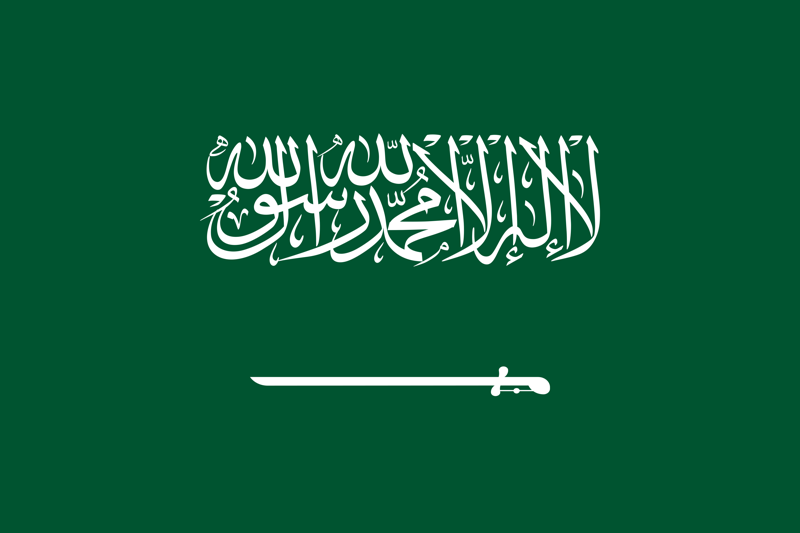
| 10 | 🇸🇦 Saudi Arabia | Energy, wealth & Middle Eastern influence |
The scores in this chart are an editorial visualization of the ranking, not an official index.
What Makes a Country Powerful?
Being a powerful country is about much more than having a large army. In the modern world, national power comes from a combination of economic size, military capabilities, technological advancement, diplomatic reach, natural resources, population, alliances and cultural influence.
For example, the United States combines the world’s leading military capabilities with a huge economy, advanced technology companies, global financial influence and an extensive network of alliances.
China combines enormous economic and manufacturing capacity with a rapidly expanding military and growing diplomatic influence.
India is increasingly important because it combines a huge population, one of the world’s fastest-growing major economies, nuclear weapons, a large military, a growing technology sector and an increasingly influential position in the Indo-Pacific.
Military rankings reinforce India’s position: Global Firepower ranks India 4th out of 145 countries for conventional military capability in 2026, behind the United States, Russia and China.
1. United States 🇺🇸
Why the United States is the world’s most powerful country
The United States remains the world’s most comprehensive power in 2026, drawing that position from its military capacity, economic strength, technological leadership, financial influence, and alliances.
Its defense establishment is enormous. It includes a worldwide network of military bases, advanced aircraft, aircraft carriers, nuclear forces, satellites, and sophisticated intelligence capabilities.
The United States was, by a wide margin, the world’s largest military spender in 2025. SIPRI estimated its military expenditure at $954 billion, compared with China’s $336 billion, which ranked second.
Its influence in the economy and technology matters just as much. American companies lead across a range of sectors, including software, artificial intelligence, cloud computing, aerospace, semiconductors, finance and entertainment.
The United States also draws strength from its broad alliance network, especially NATO and its security partnerships throughout Europe and the Indo-Pacific.
That influence extends into soft power. In the 2026 soft-power index, the United States ranks first with a score of 92.0.
Key strengths
- World’s largest military expenditure
- Nuclear superpower
- Major global technology hub
- Powerful financial system
- Global military alliances
- Strong aerospace and space capabilities
- Huge consumer market
- Significant cultural influence
Overall position: #1
2. China 🇨🇳
China is arguably the United States’ closest overall challenger. Its main advantage comes from the way its economic scale, manufacturing strength, population, technological development, and military modernization reinforce one another. As the world’s manufacturing powerhouse, China has developed enormous capabilities in shipbuilding, electric vehicles, batteries, telecommunications, electronics, and infrastructure. Its military, too, has changed dramatically: naval forces, missile capabilities, air power, space capabilities, and the nuclear arsenal have all expanded considerably.
SIPRI estimates that China had around 620 nuclear warheads at the beginning of 2026, compared with approximately 600 a year earlier. China also ranked as the world’s second-largest military spender in 2025, with estimated expenditure of $336 billion.
Economically, the IMF projects China’s real GDP growth in 2026 at around 4.6%, suggesting that the economy is still expanding despite its structural challenges.
Key strengths
- Enormous economy
- World’s leading manufacturing base
- Large military
- Rapid naval expansion
- Growing nuclear arsenal
- Advanced technology sector
- Major trade relationships
- Growing diplomatic influence
Overall position: #2
3. Russia 🇷🇺
Russia is an unusual case of national power: its influence extends well beyond what its economic size alone would imply. Much of that advantage comes from its military strength, particularly its nuclear capability. In 2026, Global Firepower ranks Russia second in conventional military capability worldwide, behind the United States. It also holds one of the world’s two largest nuclear arsenals, and SIPRI reports that the United States and Russia together possess almost 86% of the world’s nuclear warheads.
Russia’s vast territory and abundance of natural resources add to its geopolitical significance. It is still a leading energy producer, with considerable reserves of oil, natural gas, and minerals.
However, Russia’s economy is much smaller than the economies of the United States, China, Germany, and Japan. Its position is therefore shaped largely by military strength, nuclear capabilities, and geopolitical influence.
Key strengths
- Huge nuclear arsenal
- Powerful conventional military
- Large territory
- Major energy producer
- Missile and aerospace capabilities
- Permanent UN Security Council membership
- Strong geopolitical influence
Overall position: #3
4. India 🇮🇳
India is one of the world’s fastest-rising major powers
India deserves to rank among the world’s most powerful countries in 2026. Its position rests on an unusual mix of population size, economic growth, military capacity, nuclear deterrence, geography, technology, and diplomatic influence.
For conventional military capability in 2026, Global Firepower places India 4th out of 145 countries. India is also a nuclear-armed state; according to SIPRI, it possessed approximately 190 nuclear warheads at the beginning of 2026.
India’s economic power
India’s economy has become one of the major engines of global growth.
The IMF projects India’s real GDP growth at 6.4% in 2026, making it one of the fastest-growing major economies.
India’s enormous domestic market is another strategic advantage. With a population of roughly 1.48 billion, the country possesses a huge workforce, consumer base and potential technology market.
India’s military power
India has one of the world’s largest armed forces and operates across land, sea and air domains.
Its military capabilities include:
- Nuclear weapons
- Ballistic missiles
- Aircraft carriers
- Nuclear-powered submarines
- Fighter aircraft
- Long-range missile systems
- Satellite and space capabilities
- Large army and air force
- Growing domestic defense industry
SIPRI estimates that India spent $92.1 billion on its military in 2025, making it the world’s fifth-largest military spender that year.
Global Firepower’s 2026 defense-budget data places India even higher in its own estimate, at approximately $109 billion.
India’s diplomatic influence
India’s importance extends beyond military and economic statistics.
It maintains relationships with major powers while participating in major international groupings including the G20, BRICS and Quad.
India’s strategic location also gives it significant importance in the Indo-Pacific and Indian Ocean.
India’s soft power
India’s cultural influence is another major asset.
Indian cinema, music, cuisine, yoga, tourism, cricket, literature and the global Indian diaspora contribute to India’s international image.
A 2026 soft-power ranking places India 10th globally, with a score of 81.6, highlighting the country’s growing cultural and international influence.
Why India could climb higher
India’s trajectory is particularly important.
If it continues to expand its economy, manufacturing capacity, technological capabilities and defense industry, its overall influence could increase substantially over the next decade.
India’s combination of economic growth + population + military strength + nuclear capability + strategic geography makes it one of the world’s most consequential countries.
Overall position: #4
5. Germany 🇩🇪
Germany is Europe’s largest industrial and economic powerhouse, and it remains one of the world’s most influential countries. Much of that influence comes from its industrial economy, export strength, technology, finance, and central position in Europe. The country has particular strengths in automobiles, machinery, chemicals, pharmaceuticals, and advanced manufacturing. Its military position, too, has been changing rapidly as European countries raise defense spending.
SIPRI estimated Germany’s 2025 military spending at $114 billion, ranking it fourth in the world for that year.
Key strengths
- Europe’s major economic powerhouse
- Advanced manufacturing
- Automotive industry
- Strong exports
- Major EU influence
- Increasing defense capabilities
- Strong technology and engineering sectors
Overall position: #5
6. United Kingdom 🇬🇧
The United Kingdom remains a major global power, even though its population is relatively small compared with those of the United States, China or India. That standing rests on several sources of influence: military capabilities, finance, diplomacy, intelligence, nuclear weapons and global cultural influence. As a permanent member of the UN Security Council, the UK also possesses nuclear weapons. Its naval and aerospace capabilities are sophisticated as well, including aircraft carriers and advanced combat aircraft.
London’s financial sector provides Britain with another significant source of influence worldwide.
Britain was also one of the world’s biggest military spenders in 2025; SIPRI put its expenditure at $89 billion.
Key strengths
- Nuclear weapons
- Permanent UN Security Council seat
- Global financial center
- Advanced military
- Strong intelligence capabilities
- Global diplomatic network
- Major cultural influence
Overall position: #6
7. France 🇫🇷
France is one of the world’s most strategically independent powers.
Unlike many countries that rely heavily on alliances for their security, France maintains an independent nuclear deterrent and a capable military-industrial base.
France possesses:
- Nuclear weapons
- Aircraft carriers
- Advanced fighter aircraft
- Submarines
- Space capabilities
- Global military deployments
- Major diplomatic influence
France holds a permanent seat on the UN Security Council and is a major member of both the European Union and NATO. Its aerospace and defense industries matter greatly, with French companies producing aircraft and missiles, building satellites and naval systems, and developing other advanced technologies.
France is also a major soft-power performer: in the 2026 ranking, it stands second worldwide, surpassed only by the United States.
Overall position: #7

8. Japan 🇯🇵
Japan remains one of the world’s most technologically advanced economies.
Its power is primarily economic and technological, but Japan is also becoming increasingly important strategically because of the security environment in East Asia.
Japan has world-class capabilities in:
- Robotics
- Automotive manufacturing
- Electronics
- Precision engineering
- Semiconductors
- Shipbuilding
- Aerospace
- Advanced materials
Japan is also strengthening its defense capabilities in response to regional security concerns.
Its cultural influence is enormous. Anime, manga, gaming, cuisine, automobiles and Japanese design have given the country a powerful global cultural presence.
The 2026 soft-power ranking places Japan 8th globally.
Overall position: #8
9. South Korea 🇰🇷
South Korea ranks among the world’s most technologically advanced middle-sized powers. Despite its limited geographic size, the country exerts an influence that extends far beyond what its dimensions might imply. South Korean companies lead global markets in semiconductors, electronics, automobiles, batteries, and consumer technology.
South Korea also has an advanced military backed by a major defense industry. Its defense firms are exporting more and more fighter aircraft, tanks, artillery systems, and naval equipment. Beyond military strength, the country’s cultural reach has surged worldwide through K-pop, Korean television and cinema, gaming, beauty products, and food.
South Korea ranked 5th in Global Firepower’s 2026 conventional military ranking.
It also ranked 11th in the 2026 soft-power index.
Key strengths
- Semiconductors
- Advanced electronics
- Automotive industry
- Defense manufacturing
- Strong military
- K-pop and entertainment
- Technology and innovation
Overall position: #9
10. Saudi Arabia 🇸🇦
Saudi Arabia holds a distinctive place among the world’s most influential nations. Much of its power comes from its energy resources and financial capacity. As one of the leading oil producers worldwide, it exerts an outsized influence on global energy markets.
Its sovereign wealth and investment capacity have enabled substantial spending on infrastructure, technology, sports, tourism, and international business. It is also a major military spender. SIPRI estimated Saudi Arabia’s 2025 military expenditure at approximately $83.2 billion, placing the country among the world’s top military spenders.
The country’s location adds to its importance. Positioned in the Middle East’s center and home to Islam’s two holiest cities, it holds considerable religious and diplomatic influence.
Key strengths
- Oil and energy resources
- Large financial reserves
- Major military spending
- Strategic Middle Eastern location
- Religious influence
- Sovereign wealth investment
- Growing diplomatic influence
Overall position: #10
How India Compares With Other Major Powers
India’s position becomes clearer when several individual measures are examined.
| Factor | India’s Position |
| Population | Among the world’s largest |
| Conventional military power | #4 globally — Global Firepower |
| Military expenditure | #5 globally — SIPRI 2025 |
| Nuclear capability | Nuclear-armed state |
| 2026 real GDP growth | 6.4% — IMF projection |
| Soft power | #10 — 2026 index |
| PPP economic size | #3 — Global Firepower data |
| Strategic location | Indian Ocean / Indo-Pacific |
| Major international groupings | G20, BRICS, Quad and others |
India’s conventional military ranking is particularly notable. Global Firepower places India fourth, ahead of countries such as France, Japan, the UK and Germany.
India also ranked fifth globally in military expenditure in SIPRI’s 2025 data, spending an estimated $92.1 billion.
India vs China: The Asian Power Competition
The comparison between India and China is increasingly important to the future of global politics.
China currently possesses a larger economy, larger manufacturing base and greater military-industrial capacity.
India, however, has several major advantages of its own:
India’s advantages
- Larger projected population
- Faster economic growth
- Strategic Indian Ocean location
- Large domestic consumer market
- Strong democratic institutions
- Nuclear deterrence
- Major technology and services sector
- Growing manufacturing capabilities
- Strategic relationships with the US, Europe, Japan and other partners
China’s 2026 real GDP growth is projected at about 4.6%, compared with India’s 6.4%, according to the IMF’s latest country data.
The two countries therefore represent two of the most important long-term power centers in Asia.
Military Power vs Overall National Power
It is important not to confuse military power with overall national power.
For example, Global Firepower’s 2026 ranking puts:
- United States
- Russia
- China
- India
- South Korea
- France
- Japan
- United Kingdom
- Türkiye
- Italy
But an overall power ranking can produce a different result because a country also needs economic strength, technological capabilities, diplomatic influence and soft power.
That is why Russia can rank extremely high militarily while countries such as Germany and Japan can possess enormous economic influence.
Similarly, India is increasingly powerful because it combines military power with economic growth, population scale, technology and diplomacy.
What Are the World’s Most Powerful Countries Based on Military Strength?
If the ranking is based only on conventional military capability, Global Firepower’s 2026 list gives the following top 10:
- United States
- Russia
- China
- India
- South Korea
- France
- Japan
- United Kingdom
- Türkiye
- Italy
This demonstrates why there is no single definitive answer to the question “Which is the most powerful country in the world?”
Different methodologies measure different forms of power.
World’s Biggest Military Spenders
Military expenditure is another useful indicator of national power.
According to SIPRI’s 2026 data covering 2025 spending, the world’s top military spenders were:
| Rank | Country | 2025 Military Spending |
| 1 | United States | $954 billion |
| 2 | China | $336 billion* |
| 3 | Russia | $190 billion* |
| 4 | Germany | $114 billion |
| 5 | India | $92.1 billion |
| 6 | United Kingdom | $89.0 billion |
| 7 | Ukraine | $84.1 billion* |
| 8 | Saudi Arabia | $83.2 billion* |
| 9 | France | $68.0 billion |
| 10 | Japan | $62.2 billion |
*SIPRI figures marked as estimates.
Global military expenditure reached approximately $2.887 trillion in 2025, according to SIPRI.
The Role of Nuclear Weapons
Nuclear weapons remain an important component of strategic power.
At the beginning of 2026, SIPRI identified nine nuclear-armed states:
- United States
- Russia
- China
- United Kingdom
- France
- India
- Pakistan
- North Korea
- Israel
Together, they possessed an estimated 12,187 nuclear weapons.
India’s estimated arsenal was approximately 190 warheads.
However, nuclear weapons alone do not make a country a global superpower. Economic capacity, conventional forces, technological capabilities, diplomatic reach and the ability to project power internationally all matter.
Which Country Is the Most Powerful in the World?
The answer depends on how power is measured.
Overall power – United States
Military capability – United States
Nuclear power – United States and Russia
Manufacturing power – China
Fast-growing major economy – India
European economic power – Germany
Global financial and diplomatic reach – United States and United Kingdom
Soft power – United States
The United States remains the most comprehensive global power because it combines exceptional military, economic, technological, financial and diplomatic capabilities.
China is the strongest challenger.
Russia remains exceptionally powerful militarily and strategically.
India stands out as one of the world’s most important rising powers, with its combination of economic growth, population scale, military capability and geopolitical importance.
Final Ranking: Top 10 Most Powerful Countries in the World in 2026
| Rank | Country | Main Source of Power |
| 🥇 1 | United States | Military, economy, technology, alliances |
| 🥈 2 | China | Economy, manufacturing, military |
| 🥉 3 | Russia | Nuclear weapons, military, resources |
| 4 | India | Military, economy, population, diplomacy |
| 5 | Germany | Economy, industry, European influence |
| 6 | United Kingdom | Military, finance, nuclear capability |
| 7 | France | Military, nuclear weapons, diplomacy |
| 8 | Japan | Economy, technology, industry |
| 9 | South Korea | Technology, military, industry |
| 10 | Saudi Arabia | Energy, wealth, regional influence |
Conclusion
The balance of global power is changing.
The United States is still the world’s most powerful all-round country, though China keeps narrowing the gap in economic, technological and military terms. Russia remains strategically important on a vast scale, largely because of its military and nuclear capabilities.
India, though, may be the most significant long-term story. It is no longer just a regional power. With its enormous population, rapidly growing economy, nuclear arsenal, large military, expanding defense industry, technology sector and strategic position between the Middle East and Indo-Pacific, India is taking on greater importance worldwide.
The IMF projects that India’s real GDP will grow by 6.4% in 2026; Global Firepower, meanwhile, places the country’s conventional military capability fourth worldwide.
India’s future standing will hinge on whether it can turn its large population and expanding economy into stronger productivity, more sophisticated manufacturing, technological leadership, a modernized military, and wider influence abroad.